News
Pressure Builds for Policy Rate Cut Ahead of September 14 SBP Meeting

By Mariam Khan
Real Estate Analyst
4 min read
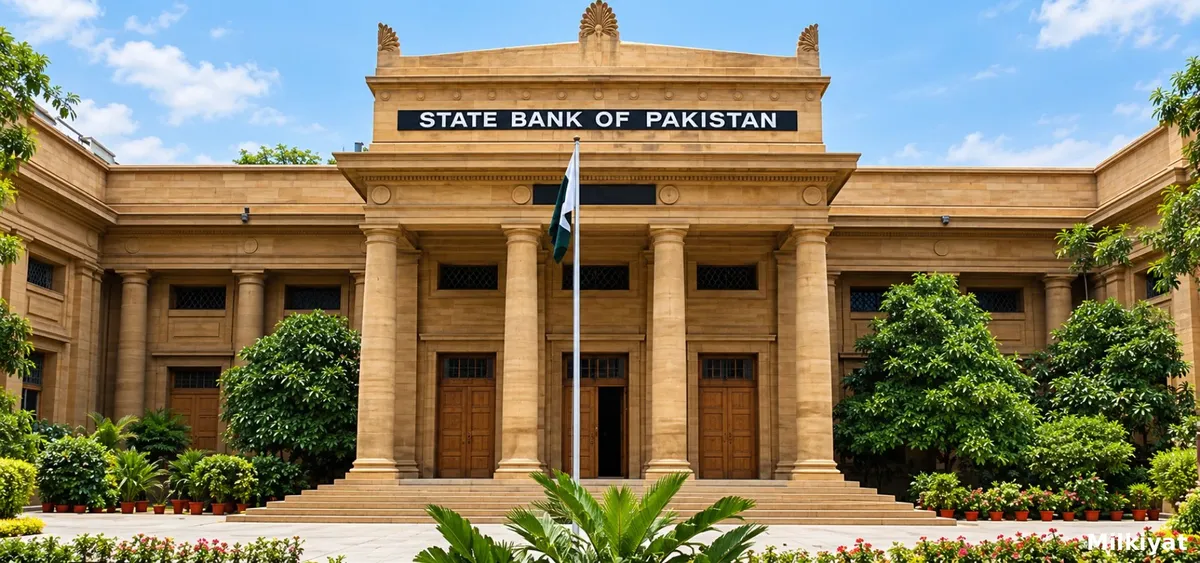
The Faisalabad Chamber of Commerce and Industry has formally called for a substantial reduction in Pakistan's policy rate ahead of the State Bank of Pakistan's Monetary Policy Committee meeting scheduled for 14 September 2026. The chamber argues the current 11.5 percent policy rate continues to keep borrowing and production costs high, and is pressing for a significant cut when the committee meets.
This Is a Call for Action, Not a Decision Already Made
It is important to be precise about what this represents at this stage. No rate decision has been made, and the FCCI's statement is an industry body's pre-meeting advocacy position, not a confirmed policy outcome. The actual decision rests solely with the Monetary Policy Committee when it meets on the stated date, and readers should treat any characterisation of this as an imminent rate cut with appropriate caution until the committee actually announces its decision.
Why the Current 11.5 Percent Rate Itself Is Notable
Pakistan's policy rate has followed a genuinely dramatic trajectory over the past two years, falling from a peak of 22 percent in mid-2024 through a sustained cutting cycle to as low as 10.5 percent by late 2025 and into early 2026. Since then, the rate has actually moved slightly upward again, back to 11.5 percent, with the Monetary Policy Committee holding at that level for at least two consecutive meetings through July 2026, citing an improving macroeconomic outlook alongside continued caution over inflation risks tied to global energy prices and geopolitical tensions in the Middle East. This makes the current rate environment genuinely more complex than a simple continuation of the earlier easing cycle, since the committee has already reversed course once and then paused, rather than cutting steadily throughout this entire period.
Why Inflation and External Risk Factors Complicate a Straightforward Cut
The Monetary Policy Committee's recent decisions have specifically cited global energy prices and geopolitical tensions as factors weighing on the inflation outlook, given Pakistan's heavy reliance on imported fuel. With domestic petrol and diesel prices having risen sharply and repeatedly in recent days amid continued international oil market disruption, the committee faces a genuine tension between industry calls for lower borrowing costs and its own stated caution about inflation risk stemming from exactly this kind of energy price volatility.
What Remains Genuinely Uncertain
Whether the Monetary Policy Committee cuts, holds, or in a less likely scenario raises the policy rate on 14 September depends on its own assessment of inflation, external account conditions, and currency stability, factors that are not fully disclosed publicly ahead of the meeting itself. Given the committee's own recent history of pausing rather than continuing to cut despite earlier momentum, industry calls for a rate cut should not be treated as a reliable predictor of the actual outcome.
What This Means for Mortgages, Developers and Property Investors
Any actual reduction in the policy rate on 14 September could, over time, lower financing costs for mortgages, construction loans, and broader development financing, directly benefiting developers, construction businesses, and property buyers relying on borrowed capital. Conversely, a hold at the current 11.5 percent level would keep borrowing costs at their present, relatively elevated level, extending the financing environment developers and buyers have already been operating within throughout this year. Given the genuine uncertainty around this specific decision, property sector participants with financing decisions tied to the outcome should plan for either scenario rather than assuming a cut is the more likely result simply because industry bodies are calling for one.
What to Watch For Next
The concrete, decisive event to watch for is the Monetary Policy Committee's actual announcement following its 14 September meeting, not the FCCI's advocacy statement itself. Property investors, developers, and mortgage borrowers should wait for that specific announcement before adjusting any financing plans, given how much the committee's own recent decisions have diverged from simple, continued rate cutting.