News
Punjab Approves 7 Major Road Packages Under PPP Programme

By Mariam Khan
Real Estate Analyst
4 min read
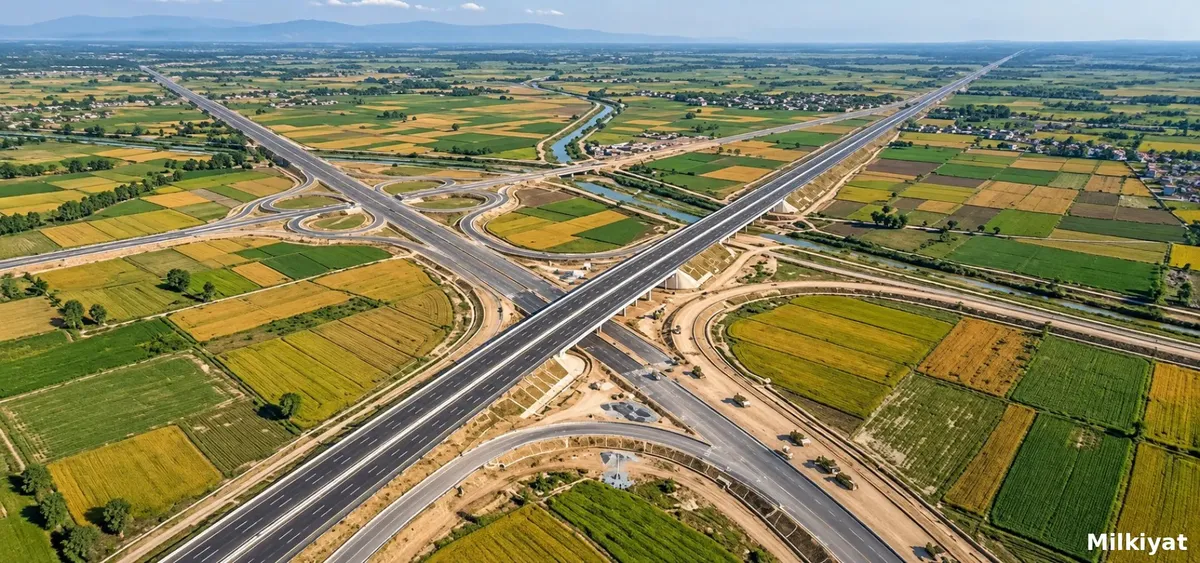
The Government of Punjab approved seven road construction and rehabilitation packages under its Public Private Partnership programme during the fifth meeting of the Punjab Public Private Partnership Authority, chaired by Senior Provincial Minister Marriyum Aurangzeb. Under the approved arrangements, successful private bidders will construct and rehabilitate the roads, maintain operational management for seven years, and share profits with the provincial government.
What Else Was Decided at the Same Meeting
The same session also endorsed a separate initiative for local production of Foot and Mouth Disease vaccines through the PPP framework, alongside a review of transforming existing livestock farms into vaccine production facilities. The authority additionally approved amendments to its bid evaluation mechanism specifically aimed at enhancing transparency in how future PPP contracts are awarded, and formally ratified decisions taken during its own fourth meeting.
About the Authority Making These Decisions
The Punjab Public Private Partnership Authority, commonly known as P4A, is a statutory organisation of the Government of Punjab responsible for steering the province's overall PPP landscape, operating under the legal and regulatory framework established by the Punjab Public Private Partnership Act, 2019. According to the Government of Punjab's own official PPP portal, the province already has six PPP projects worth a combined 259 million dollars executed and fully operational, with a further pipeline exceeding 976 million dollars, including seven projects worth 507 million dollars currently in the approval process for tendering and ten additional projects worth Rs95 billion still at the feasibility study stage. This week's seven road packages represent a concrete addition moving through that same broader pipeline.
What the Seven Year Operate and Profit Share Model Actually Means
Under this structure, winning bidders do not simply build the roads and hand them over. They retain responsibility for operational management of the completed roads for seven years following construction, during which period they share profits generated from the roads with the provincial government. This model shifts both construction execution and a meaningful share of ongoing maintenance responsibility onto private sector partners, while giving government a continuing revenue share rather than a one time construction payment alone.
Why This Matters Beyond the Roads Themselves
Senior Minister Aurangzeb described Chief Minister Maryam Nawaz's vision of developing various sectors through private sector collaboration as a genuine game changer for the province, emphasising that timely project completion without compromising quality remains the key standard against which these PPP arrangements will be assessed. The scale of Punjab's broader PPP pipeline, spanning healthcare facilities, urban development, and road sector initiatives according to P4A's own stated project identification work, suggests this week's road approvals form part of a deliberately expanding, multi sector private partnership strategy rather than a standalone infrastructure decision.
What Remains Unconfirmed
The specific locations, individual costs, and construction timelines for each of the seven approved road packages have not been detailed alongside this announcement. Given that successful bidders must still be identified and contracts finalised before construction begins, actual ground level work on any of these seven packages remains a further step away from this approval stage.
What This Means for Property Along Affected Corridors
Improved road connectivity delivered through this kind of structured, privately managed partnership can increase accessibility to surrounding residential areas, commercial corridors, industrial sites, and currently undeveloped land once specific routes are identified and completed. The PPP structure itself, with private operators retaining a direct, seven year financial stake in each road's ongoing performance, may also provide a stronger built in incentive for sustained road maintenance quality compared to conventional, publicly executed and maintained road projects. Property owners, developers, and investors should watch for confirmation of the seven specific road locations as the genuine next milestone, since that detail will determine which corridors and surrounding land stand to benefit directly from this approval.