News
Punjab Introduces New Cleaning Fee for Houses Alongside Property Tax

By Mariam Khan
Real Estate Analyst
4 min read
ShareWhatsApp
News
By Mariam Khan
Real Estate Analyst
4 min read
News
By Mariam Khan
Real Estate Analyst
4 min read
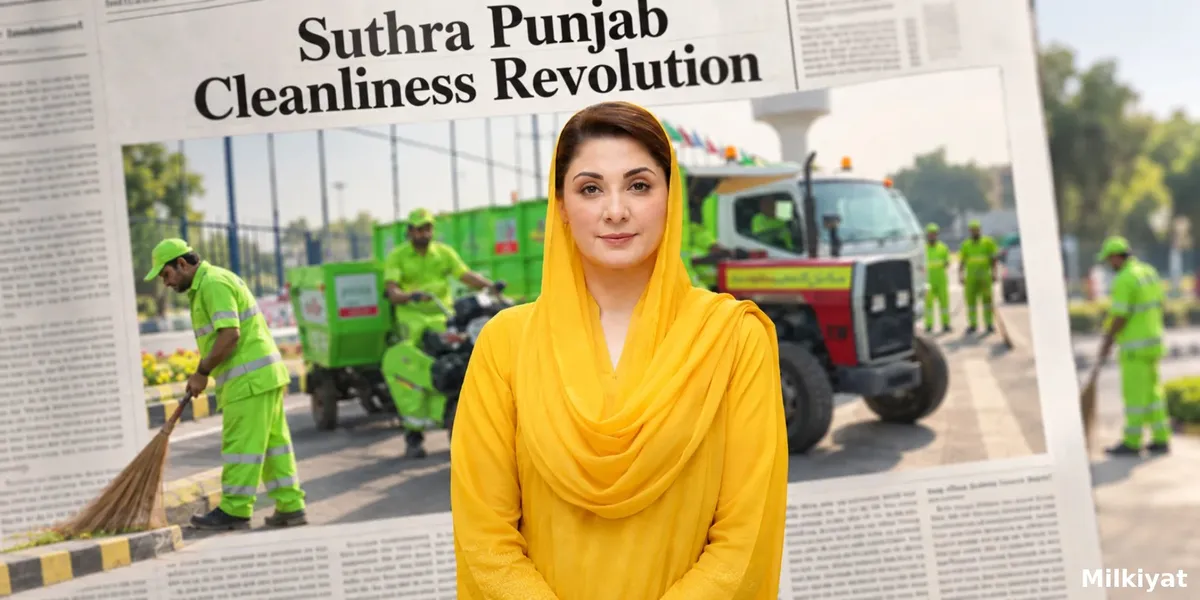
Punjab's Excise and Taxation Department will begin collecting Suthra Punjab cleaning and sanitation fees from residential and commercial properties alongside the existing property tax during the 2026-27 financial year. The arrangement follows an agreement between the Suthra Punjab Authority and the Excise and Taxation Department, with the underlying collection mechanism having already received cabinet committee approval.
The reported residential cleaning fee scales with house size across five tiers:
| House Size | Cleaning Fee |
|---|---|
| Up to 5 marla | Rs300 |
| 5 to 10 marla | Rs500 |
| 10 to 20 marla | Rs1,000 |
| 20 to 40 marla | Rs2,000 |
| Above 40 marla | Rs5,000 |
Commercial units reportedly face separate charges depending on their category and size:
| Commercial Category | Cleaning Fee |
|---|---|
| Category 1 | Rs500 |
| Category 2 | Rs1,000 |
| Category 3 | Rs3,000 |
Structuring the fee by property size rather than as a flat charge means larger residential and commercial properties will contribute proportionally more toward the sanitation programme than smaller ones.
To implement this new charge, the Excise Department will conduct house to house surveys and prepare property wise cleaning bills before collection begins. This survey step matters because it means the department is building or updating a property level record for sanitation billing purposes specifically, rather than simply layering the new fee onto whatever property records already exist for standard urban immovable property tax purposes. Property owners should expect a physical survey visit or notice as part of this rollout rather than only a bill arriving without prior contact.
It is important to be precise about what this actually is. This is a cleaning and sanitation fee being collected alongside property tax, not a new general property tax applied to every house. Punjab's existing urban immovable property tax continues to operate separately from this sanitation charge, and the Excise Department is currently advertising a 5 percent rebate for property tax paid by September 30, 2026. Property owners should treat the cleaning fee as an additional, distinct line item tied specifically to the Suthra Punjab sanitation programme rather than an increase to their underlying property tax rate.
Attaching a new municipal service charge to an existing tax collection mechanism the Excise Department already administers is a common approach to rolling out new charges efficiently, since it avoids building an entirely separate billing and enforcement system for the sanitation fee alone. This also means property owners who are already accustomed to receiving and paying property tax bills will see the cleaning fee appear as part of the same overall billing relationship with the Excise Department, rather than through a separate agency or process.
Residential and commercial property owners across Punjab should expect a combined bill that includes both standard property tax and the new Suthra Punjab cleaning fee once the house to house survey process reaches their property, and should budget for the additional charge based on their property's size tier. Owners looking to reduce their overall property tax bill should also be aware of the 5 percent rebate currently available for payments made by September 30, 2026, though this rebate applies to the property tax component rather than the new cleaning fee itself.
CDA has ordered Islamabad Villas near Park Enclave and Bani Gala sealed over missing LOP and NOC approvals, while also restricting advertising and utility connections.
CDA’s urban regeneration regulations set out a framework for upgrading, redeveloping and relocating recognised katchi abadis across Islamabad.
LDA has restarted improvement work on nine Canal Road underpasses from Thokar Niaz Baig to Mall Road, covering asphalt, repairs, signage and restoration.
ADB says Pakistan’s construction sector could benefit from lower property transaction taxes and higher housing subsidies, despite continued inflation and input-cost pressures.
Punjab's Excise and Taxation Department will begin collecting Suthra Punjab cleaning and sanitation fees from residential and commercial properties alongside the existing property tax during the 2026-27 financial year. The arrangement follows an agreement between the Suthra Punjab Authority and the Excise and Taxation Department, with the underlying collection mechanism having already received cabinet committee approval.
The reported residential cleaning fee scales with house size across five tiers:
| House Size | Cleaning Fee |
|---|---|
| Up to 5 marla | Rs300 |
| 5 to 10 marla | Rs500 |
| 10 to 20 marla | Rs1,000 |
| 20 to 40 marla | Rs2,000 |
| Above 40 marla | Rs5,000 |
Commercial units reportedly face separate charges depending on their category and size:
| Commercial Category | Cleaning Fee |
|---|---|
| Category 1 | Rs500 |
| Category 2 | Rs1,000 |
| Category 3 | Rs3,000 |
Structuring the fee by property size rather than as a flat charge means larger residential and commercial properties will contribute proportionally more toward the sanitation programme than smaller ones.
To implement this new charge, the Excise Department will conduct house to house surveys and prepare property wise cleaning bills before collection begins. This survey step matters because it means the department is building or updating a property level record for sanitation billing purposes specifically, rather than simply layering the new fee onto whatever property records already exist for standard urban immovable property tax purposes. Property owners should expect a physical survey visit or notice as part of this rollout rather than only a bill arriving without prior contact.
It is important to be precise about what this actually is. This is a cleaning and sanitation fee being collected alongside property tax, not a new general property tax applied to every house. Punjab's existing urban immovable property tax continues to operate separately from this sanitation charge, and the Excise Department is currently advertising a 5 percent rebate for property tax paid by September 30, 2026. Property owners should treat the cleaning fee as an additional, distinct line item tied specifically to the Suthra Punjab sanitation programme rather than an increase to their underlying property tax rate.
Attaching a new municipal service charge to an existing tax collection mechanism the Excise Department already administers is a common approach to rolling out new charges efficiently, since it avoids building an entirely separate billing and enforcement system for the sanitation fee alone. This also means property owners who are already accustomed to receiving and paying property tax bills will see the cleaning fee appear as part of the same overall billing relationship with the Excise Department, rather than through a separate agency or process.
Residential and commercial property owners across Punjab should expect a combined bill that includes both standard property tax and the new Suthra Punjab cleaning fee once the house to house survey process reaches their property, and should budget for the additional charge based on their property's size tier. Owners looking to reduce their overall property tax bill should also be aware of the 5 percent rebate currently available for payments made by September 30, 2026, though this rebate applies to the property tax component rather than the new cleaning fee itself.
CDA has ordered Islamabad Villas near Park Enclave and Bani Gala sealed over missing LOP and NOC approvals, while also restricting advertising and utility connections.
CDA’s urban regeneration regulations set out a framework for upgrading, redeveloping and relocating recognised katchi abadis across Islamabad.
LDA has restarted improvement work on nine Canal Road underpasses from Thokar Niaz Baig to Mall Road, covering asphalt, repairs, signage and restoration.
ADB says Pakistan’s construction sector could benefit from lower property transaction taxes and higher housing subsidies, despite continued inflation and input-cost pressures.