News
Punjab Launches Pre-Smog Crackdown Targeting Construction Dust and Brick Kilns

By Mariam Khan
Real Estate Analyst
4 min read
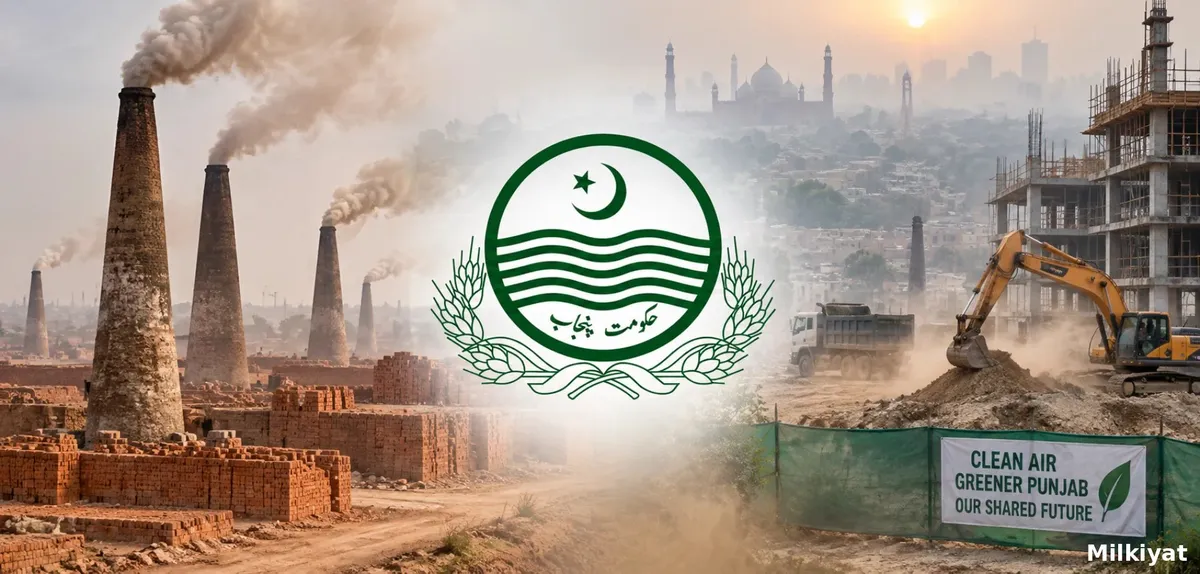
The Government of Punjab has begun a province wide pre-smog enforcement campaign ahead of the October to January pollution season, with authorities ordered to clamp down on construction dust and intensify inspections of brick kilns, particularly those operating without required zigzag technology. The Punjab Environment Protection Agency has directed relevant departments, civic authorities, and development agencies to tighten implementation of pollution control measures.
Why This Year's Approach Emphasises Prevention Over Reaction
This campaign explicitly represents a shift toward acting before pollution levels rise rather than responding once air quality has already deteriorated, with enforcement teams directed to intensify inspections and strengthen compliance well ahead of the season's typical peak. According to EPD Punjab's own published smog mitigation results, this preventive approach has already shown measurable results in the recent past: independent monitoring confirmed daily PM2.5 peaks fell 56 percent, from 539 micrograms per cubic metre in November 2024 to 237 micrograms per cubic metre in November 2025, with the monthly average declining 37 percent and year to date pollution data showing a 15.6 percent overall reduction. That earlier campaign included demolition of 485 illegal brick kilns and sealing of a further 3,178, alongside more than Rs276 million in fines, giving this year's renewed effort a genuine, evidence based track record to build on rather than starting from an unproven strategy.
The Specific Construction Dust Proposal Worth Noting
Beyond intensified inspection alone, the agency has proposed making compliance with dust control standard operating procedures an integral part of the terms and conditions for project approval and execution itself, effectively making environmental compliance a mandatory requirement built directly into how development projects are approved going forward, rather than a separate matter enforced only after construction begins.
What Else the Campaign Covers
The government has ordered a clampdown on major pollution sources spanning construction dust, dry sweeping, crop residue burning, brick kilns, waste burning, and vehicle emissions. EPD has separately directed the Suthra Punjab Authority to discontinue dry sweeping in favour of mechanical or wet sweeping across the province, since dry sweeping re-suspends settled road dust back into the atmosphere, contributing directly to elevated particulate concentrations along major roads and high traffic corridors.
How Monitoring Will Actually Work
Enforcement will increasingly rely on Safe City cameras, thermal imaging, and AI based monitoring systems, reflecting a shift toward continuous, technology assisted surveillance of pollution sources rather than relying solely on periodic manual inspection. This campaign operates under the legal authority of the Punjab Environmental Protection Act, 1997, and the more recent Punjab Environmental Protection Smog Prevention and Control Rules, 2023, which together give EPA Punjab its formal enforcement basis for actions including sealing, demolition, and fines against non compliant sources.
What Remains to Be Seen
Whether this year's campaign achieves comparable or improved results relative to the documented gains of the previous season will only become clear once the October to January pollution season is actually under way. The specific proposal to embed dust control SOP compliance directly into project approval conditions has not yet been confirmed as formally adopted policy, and its actual implementation timeline remains to be detailed.
What This Means for Developers and Contractors in Lahore and Across Punjab
Developers and contractors with active or planned construction sites anywhere in Punjab should treat dust suppression compliance as an increasingly central, rather than peripheral, requirement, particularly given the specific proposal to tie such compliance directly to project approval itself. Given the intensified use of camera based and AI monitoring, construction sites should expect a genuinely higher likelihood of detection for non compliance than under previous, more manually intensive inspection regimes, and should ensure dust control measures are actively and continuously maintained rather than only in place during anticipated inspection visits.
What This Means for Brick Kiln Dependent Construction Material Supply
Continued and intensified action against kilns lacking zigzag technology carries direct relevance for brick availability and pricing during the coming construction season, particularly given the substantial number of kilns already sealed or demolished in comparable enforcement drives. Developers and contractors planning brick dependent construction work through the winter months should factor potential supply and pricing pressure from this enforcement pattern into their material procurement planning, particularly for projects sourcing bricks from kilns that may not have completed the zigzag conversion process.