News
Punjab Orders Road, Drainage and Sewerage Improvements Across Cities

By Mariam Khan
Real Estate Analyst
Updated 5 min read
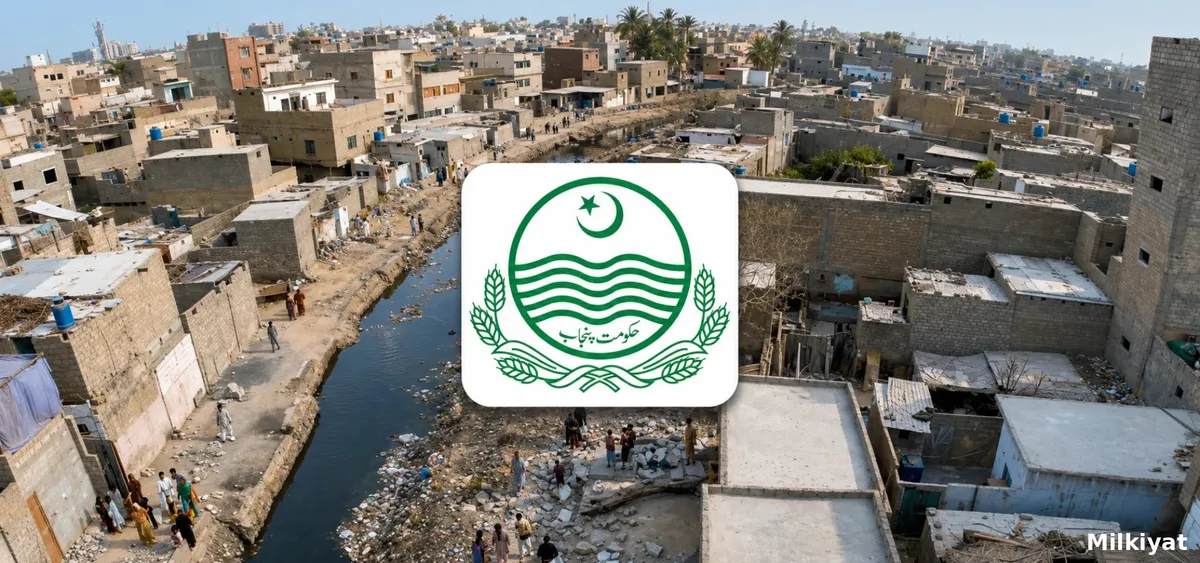
Punjab Chief Minister Maryam Nawaz Sharif has directed authorities to improve roads, drainage, and sewerage systems, remove illegal ramps, and improve traffic management as part of a broader programme covering city entrances and urban beautification across the province, with directives issued through a series of meetings reviewing the Punjab Development Plan and Own Source Revenue development projects.
What Was Actually Directed
The chief minister ordered a ban on excavation and other damage to newly constructed roads, directing departments to coordinate their work and prevent repeated digging, and instructed that manholes and sewerage covers be kept level with road surfaces to within a stated tolerance of not even a millimetre, specifically to prevent accidents. All new roads are required to include standard roadside drainage, signage, and lane markings. Separately, she ordered the removal of illegal ramps outside houses that obstruct roads and directed installation of drain covers made of recycled plastic along roadsides, while barring departments from collecting charges from shopkeepers without prior approval.
The City Entrance Beautification Component
Beyond road and drainage standards, the chief minister has directed comprehensive beautification of city entry and exit points across Punjab, including cleanliness beneath overhead bridges, development of green belts, and creation of play areas and public spaces, alongside decoration and aesthetic improvement of overhead bridges and underpasses. She has sought a comprehensive plan for establishing washroom facilities along Punjab's highways for travellers, and instructed that roads be fully reconstructed and restored immediately after excavation for sewerage or drainage projects, rather than left in a damaged or incomplete state.
The Scale of the Programme This Sits Within
This directive is not a standalone announcement but part of the considerably larger Punjab Development Plan, under which development projects worth Rs234 billion are currently in progress across seven cities, with a second phase planned to extend coverage to eight additional cities. Under this plan, sewerage, disposal, drainage, and water storage tank projects are specifically under way in Sargodha, Dera Ghazi Khan, Gujrat, and Jhang, while trunk sewerage, new disposal stations, and rainwater drainage systems are being developed in Jhelum, Hafizabad, and Okara. A total of 526 machinery units have been allocated specifically for sewerage and drainage systems under the plan.
What Was Approved for Specific Cities
Under the related Own Source Revenue development programme, the chief minister approved schemes across six divisions, Lahore, Multan, Bahawalpur, Sahiwal, Rawalpindi, and Faisalabad, covering construction and expansion of dual carriageways, road carpeting, footpaths, kerb stones, lane marking, and roadside drainage, alongside sewerage and drainage systems, sports facilities, and solarisation of disposal stations. For Lahore specifically, beautification of ten roads was approved, including Egerton Road, Lytton Road, Davis Road, Lower Mall, Lawrence Road, Queens Road, and Bank Road, alongside beautification of Lakshmi Chowk and the Orange Line train track corridor along Multan Road. Elsewhere, 42 Own Source Revenue projects were approved for Multan Division, 12 for Bahawalpur, 13 for Sahiwal, and a further set of projects for Sargodha and Dera Ghazi Khan divisions specifically covering removal of illegal ramps and recycled plastic drain covers.
Why the Drainage Component Matters Right Now
This directive's drainage and sewerage requirements carry particular relevance given the recent heavy rainfall and urban flooding experienced across Punjab's cities this monsoon season. Standard roadside drainage on new roads, properly restored excavation sites, and functioning sewerage and disposal systems all directly affect a city's capacity to handle heavy rainfall without the kind of street flooding and drainage failure that has repeatedly made news across Punjab in recent weeks.
What Remains to Be Confirmed
While specific city and division level project approvals have been detailed for several areas, the full geographic scope of the illegal ramp removal and traffic management components, along with concrete completion timelines for most individual schemes, had not been fully itemised in this reporting. Given the scale of the overall Rs234 billion programme, actual on the ground completion will need to be tracked project by project rather than assumed from the scale of the announcement alone.
What This Means for Property Owners and Developers
Better roads, functioning drainage, and properly maintained sewerage infrastructure can meaningfully affect accessibility, flood resilience, and overall development quality in the specific corridors and cities where these projects are actually delivered, with corresponding relevance for property attractiveness in Punjab's urban markets. Property owners and developers in the named cities, particularly Lahore, Multan, Bahawalpur, Sahiwal, Rawalpindi, and Faisalabad, along with Sargodha, Dera Ghazi Khan, Gujrat, Jhang, Jhelum, Hafizabad, and Okara given their specific sewerage and drainage allocations, should watch for confirmation of individual project completion in their specific area, since a province wide announcement of this scale will inevitably see uneven delivery timelines across the many cities and schemes it covers.