News
Punjab Plans Digital NOCs, Revenue Records and New Rules for Housing Societies

By Mariam Khan
Real Estate Analyst
4 min read
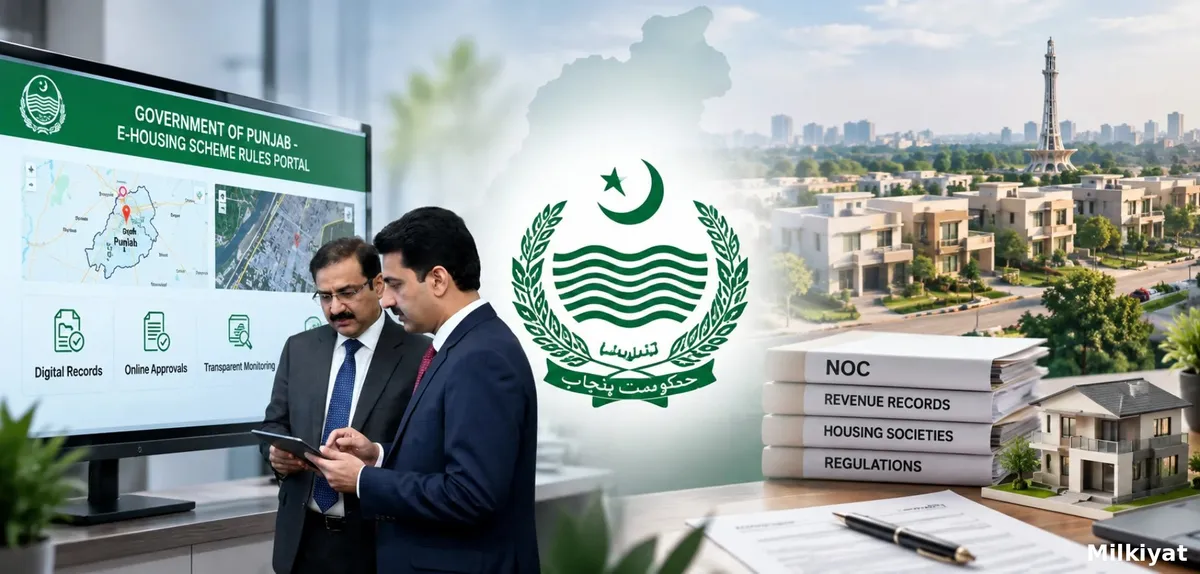
The Government of Punjab has announced plans for new laws governing housing societies across the province, including Lahore, proposing that housing schemes provide access to digital revenue records while the approval and No Objection Certificate process for private housing schemes is fully digitised.
What the Proposed Framework Actually Covers
Beyond digitising approvals and revenue records, the framework would bring registration of property dealers under formal monitoring, alongside oversight of housing scheme advertisements to ensure promotional material only covers genuinely approved projects. The government also plans to introduce third party verification of development costs claimed by housing projects, intended to provide independent oversight of project expenditures and curb potential irregularities. A separate mechanism is being prepared specifically to determine how illegal housing schemes already in existence can be regularised, with officials warning that violators of the new framework would face strict action once it takes effect.
This Builds Directly on Reforms Already Under Way
This announcement is not Punjab's first move toward digitising housing scheme regulation, and connects directly to steps already visible in practice. The Lahore Development Authority's own official portal already allows applicants to instantly track submitted applications, including property approvals, verification, NOCs, and development services, alongside a project sifting process and a one window application system, reflecting infrastructure LDA has already built specifically for this kind of digital tracking. Punjab had separately introduced housing scheme rules earlier this year establishing a centralised online platform for processing new housing scheme applications and revisions to existing projects, alongside standardised procedures for obtaining NOCs and stricter monitoring aimed at identifying illegal housing schemes at an early stage. This new, broader announcement appears to extend and formalise that same underlying digital direction into a more comprehensive, province wide legal framework.
Why Third Party Development Cost Verification Matters So Much
Introducing independent verification of development costs addresses a specific, recurring point of friction between housing scheme sponsors and allottees, since development charges are typically billed to allottees based on costs the sponsor itself reports, with limited independent means historically available to confirm those reported costs actually reflect genuine expenditure. Third party verification would give allottees and regulators alike a genuinely independent check on charges before they are passed on, directly addressing a documented source of dispute in how housing schemes bill their members.
Why the Illegal Scheme Regularisation Mechanism Is Especially Significant
Given the large number of unapproved housing developments already operating across Punjab, establishing a formal, defined procedure for determining how illegal schemes might be regularised represents a potentially significant shift from the current pattern of scattered notices, sealing actions, and demolitions handled inconsistently across different districts and tehsils. A single, defined mechanism could bring more predictability to how existing illegal schemes are actually resolved, though this same mechanism could equally raise concerns about whether it inadvertently rewards non compliance if not carefully designed.
What Remains Unconfirmed
The specific legal text of the proposed new laws, an implementation timeline, and the detailed criteria for illegal scheme regularisation have not yet been finalised or published. Given how many separate elements this framework combines, digital NOCs, revenue records, dealer registration, advertisement monitoring, cost verification, and illegal scheme regularisation, the pace at which each individual component is actually delivered may vary considerably even after the overall framework is formally enacted.
What This Means for Developers, Property Dealers and Buyers
Developers and housing scheme sponsors should expect meaningfully increased documentation and verification requirements going forward, particularly around development cost reporting, once third party verification becomes operational. Property dealers should anticipate a formal registration requirement becoming a standard part of operating legally within Punjab's housing market. Buyers should treat the prospect of digitised, more easily verifiable NOCs and revenue records as a genuine improvement to due diligence once implemented, while continuing to independently verify any specific scheme's current, actual approval status directly with the relevant authority in the meantime, since this framework remains a proposal rather than an operational system as of this announcement.