News
Punjab's Housing Society Digitisation Deadline Arrives Today: What Changes for Buyers and Sellers

By Mariam Khan
Real Estate Analyst
4 min read
Today, August 31, is the deadline the Punjab government set for private housing societies to transfer their complete property transaction records into the Housing Society Management System, the province's digital platform intended to replace the traditional paper file as the basis for proving ownership. Under the new framework, a Property Certificate becomes the legal proof of ownership, linked directly to NADRA identity records, digital mapping data and the e Registry platform. Societies that miss today's deadline face potential enforcement under the LDA Act 1975, which can include sealing a society's offices and registering legal cases against non compliant management.
Why this deadline matters more than it might first appear
This is not a new policy announced today. The directive has been in place for weeks, and several private schemes in Lahore had already completed the transfer of their records ahead of time. What makes today significant is that it is the actual compliance checkpoint, the point where a policy that has existed on paper for a while either gets tested through real enforcement or quietly slips into another extension, a pattern not unfamiliar in Pakistani regulatory deadlines generally.
What the Property Certificate actually replaces
For decades, ownership in most private housing societies has rested on a paper file system, a physical allotment or transfer document held by the buyer, verified informally against the society's own internal records with no independent, government linked cross check. This system has been the single biggest structural opening for fraud in Pakistani real estate: duplicate files sold to multiple buyers, forged transfer documents, and files whose true ownership history was effectively unverifiable without visiting the society's office in person. The Property Certificate replaces this with a digital record tied to the buyer's actual NADRA identity, mapped to a specific, verified location, and recorded on a government maintained registry rather than a society's internal ledger alone.
What this means for a plot's genuine authenticity
Buyers going through the file verification steps that have long been standard advice, checking a plot's file number directly with the housing society before paying, cross checking CNIC details, confirming no duplicate claim exists, are now, at least in societies that have actually completed the HSMS transfer, verifying against a government backed digital record rather than relying solely on the society's own paperwork. This does not eliminate the need for independent verification, since a digitised record is still only as reliable as the data entered into it, but it meaningfully raises the difficulty of the more basic fraud patterns, particularly duplicate file sales and outright forged documents, that have plagued the sector for years.
What to actually check today and in the coming weeks
Buyers and sellers active in Punjab's private housing societies right now should ask directly whether their specific society has completed its HSMS transfer as of today's deadline, since compliance is not uniform across the sector and some schemes have moved faster than others. A transaction currently in progress in a society that has not yet completed its transfer sits in a period of genuine uncertainty, worth flagging explicitly with the society and, where relevant, with legal counsel, until compliance status is clarified. Owners planning a future sale should also confirm their own existing file's status has been correctly migrated into the new system, since a data entry error or an incomplete transfer during this transition period is a realistic, if hopefully temporary, risk during any large scale digitisation effort of this kind.
What non compliance risk means practically
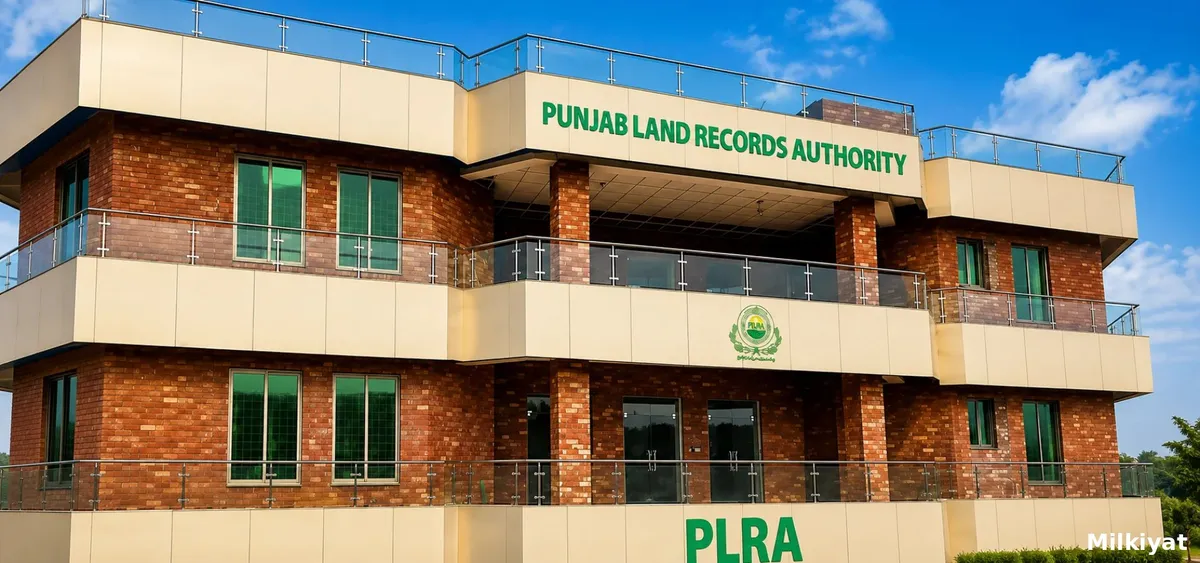
A society facing enforcement under the LDA Act 1975 for missing today's deadline could see its offices sealed and legal cases registered against its management, both of which would directly disrupt ongoing transactions, transfers and NDC processing for buyers and sellers with no direct role in the compliance failure themselves. The Punjab Land Records Authority is the body ultimately responsible for the underlying land record data feeding into this system, and disputes over migrated records will likely route through it. Anyone with an active transaction in a society whose compliance status is unclear should treat this as a reason for added caution and direct confirmation, not as an abstract regulatory story unrelated to their own purchase.