News
Rawalpindi Ring Road Misses Sixth Deadline as Project Cost Rises by Rs3.5bn

By Mariam Khan
Real Estate Analyst
5 min read
The Rawalpindi Ring Road has missed another completion deadline, with the planned 14 August target passing without the road being formally inaugurated, a follow up to milkiyat.com's earlier coverage of the planned 14 August inauguration date. This marks the sixth deadline the project has missed since work resumed on the corridor. The project's total cost has now reached Rs46.64 billion, after an additional Rs3.5 billion in escalation charges attributed to inflation, higher construction material prices and prevailing market rates, equivalent to roughly Rs1.21 billion per kilometre across the 38.6 kilometre route.
The Handover to Punjab Ring Road Authority Has Now Actually Begun
Beyond the cost increase, a genuine procedural milestone has moved forward since this project was last reviewed: the Rawalpindi Development Authority and the project's management unit have begun transferring the completed road to the Punjab Ring Road Authority in phases, rather than waiting for a single, complete handover once all remaining work is finished. This phased transfer suggests the authority is moving to formally assume responsibility for sections of the road as they individually reach completion, even as toll booth work and the wait for a confirmed inauguration date continue in parallel.
What Is Actually Finished
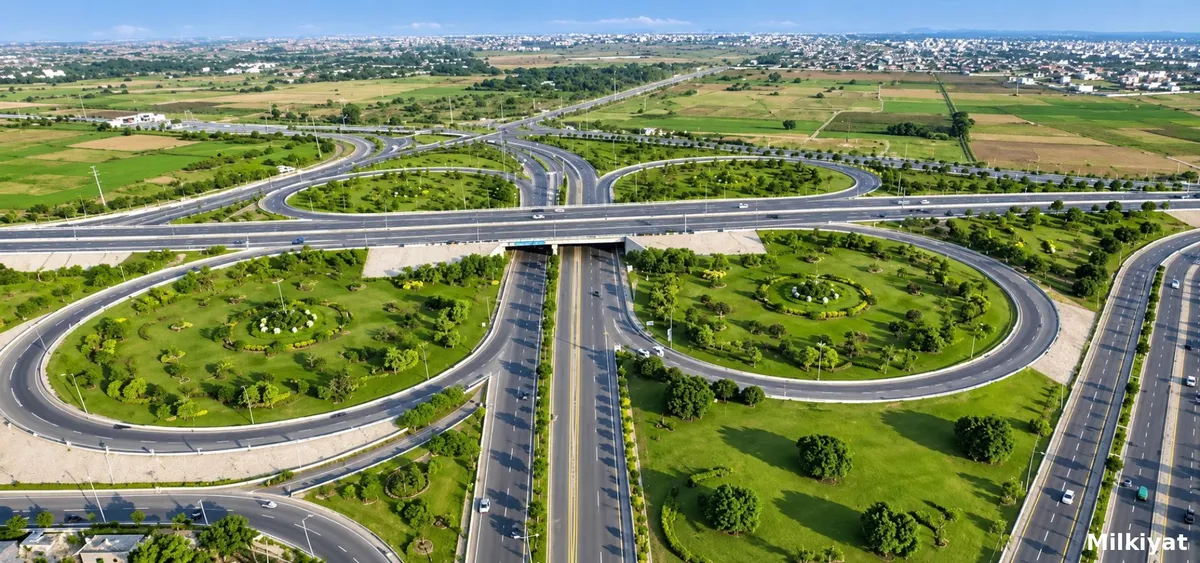
The main carriageway running from GT Road's Banth Mor to the Thallian Interchange has been fully constructed, alongside flyovers, subways, bridges and other core civil infrastructure. Road barriers, lane markings, signboards and streetlights have also been installed along the completed stretch. Four of the five planned interchanges, at Banth, Chakbeli Khan, Adiala and Chakri, have been completed. The fifth, Thallian Interchange, remains incomplete after authorities designated it for broader interchange status, expanding its scope beyond the original design. Despite the unfinished interchange, the Ring Road has already been connected to the national motorway network.
Why the Deadline Was Missed Again
The latest delay stems specifically from incomplete tolling infrastructure. Toll booths and the underlying tolling system have not yet been finished, and this remaining work is what stands between the road's current state and full operational status. Once this work is completed, the Punjab Ring Road Authority is set to formally take over the project from the Project Management Unit that has overseen construction, at which point the authority will be responsible for installing and operating the toll plaza, collecting tolls at government approved rates, and managing traffic on the completed highway.
What Else Has Changed Along the Route
Authorities have removed the controversial service area that had previously been established along the Ring Road corridor, a component of the project that had drawn scrutiny in earlier stages of development. Separately, planning has moved forward on a second phase of the project. A feasibility study has been completed for expanding the M2 motorway between the Thallian and Hakla interchanges along the CPEC route from three lanes to five lanes in each direction, a 15.3 kilometre stretch identified as the most suitable, least costly and feasible of three options considered, at an estimated cost of Rs9 billion. Separately, the Punjab Industrial Estates Development and Management Company has approved a proposal for dedicated industrial zones along the Ring Road corridor itself, though this remains pending final approval from the Punjab Assembly before it can proceed, with land intended to be allotted to industrialists at concessional rates through the Rawalpindi Chamber of Commerce.
Background on Who Actually Builds and Runs Pakistan's Highways
The National Highway Authority is the federal statutory body responsible for the planning, construction, operation and maintenance of Pakistan's national highway and motorway network, established under the National Highway Authority Act of 1991 and operating under the Ministry of Communications. While NHA holds responsibility for the country's broader national highway system, the Punjab Ring Road Authority specifically has been designated to manage toll collection and traffic operations on the completed Rawalpindi Ring Road once it opens.
What This Means for Land Values and Housing Societies Along the Corridor
Repeated deadline misses on a project of this scale carry real consequences for the growth corridor the Ring Road runs through. Housing societies and land parcels positioned near completed interchanges, particularly Banth, Chakbeli Khan, Adiala and Chakri, have already benefited from confirmed, physical road access, since these interchanges are functionally complete regardless of the tolling delay. Land and schemes clustered near the still incomplete Thallian Interchange specifically remain more exposed to continued uncertainty, given that this is the one component of the original route still without a firm completion picture. The confirmed Rs3.5 billion cost escalation, attributed directly to inflation and rising construction material prices, also offers a concrete, quantified example of how sustained cost pressure has affected even a project already well past its original budget and timeline, a pattern relevant to how developers and contractors might reasonably expect similar escalation risk on other major infrastructure projects currently under construction. Investors and buyers evaluating property along the corridor should distinguish between the road's physical completion, which is substantially finished and already connected to the motorway network, and its formal operational and toll collection status, which remains the actual source of this sixth delay. Given the project's now well documented pattern of missed deadlines, buyers should treat any new completion date as provisional until tolling infrastructure is confirmed finished and the phased handover to the Punjab Ring Road Authority has been fully completed.