News
SBP Injects Rs2.64 Trillion Into Banking System Through Open Market Operations

By Mariam Khan
Real Estate Analyst
3 min read
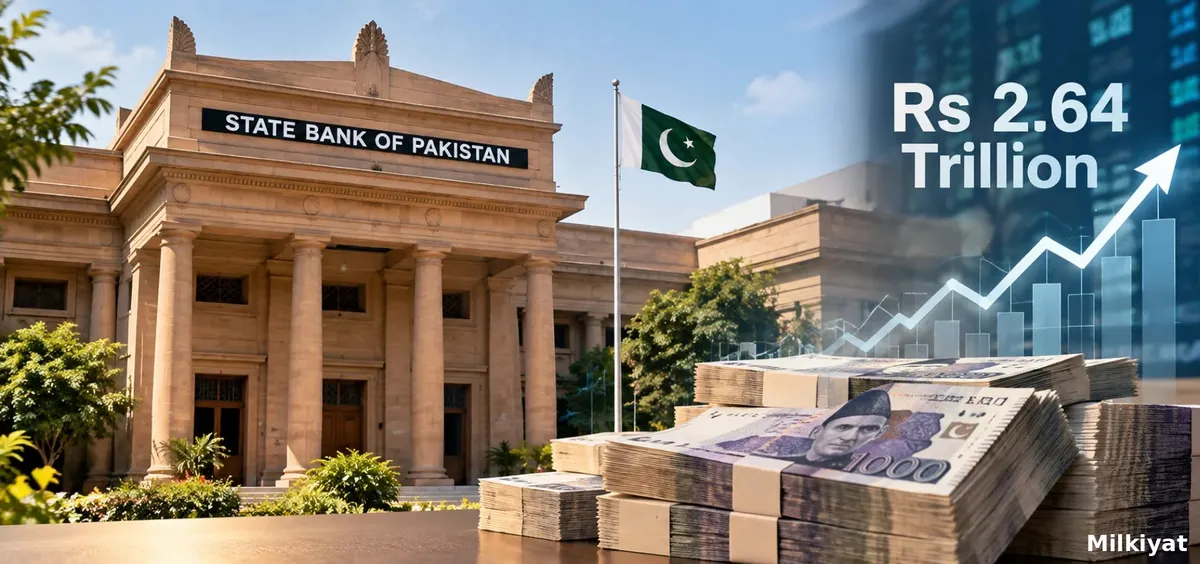
The State Bank of Pakistan injected approximately Rs2.64 trillion into the banking system on September 18, 2026, through a combination of conventional and Shariah compliant open market operations, with accepted rates on the major seven and fourteen day operations settling around 11.53 to 11.56 percent.
How the Injection Broke Down
The bulk of the injection, Rs2,305.45 billion, came through conventional reverse repo purchases spread across two tenors. On the fourteen day tenor, SBP received 15 bids offering Rs2,279.25 billion at rates ranging from 11.51 to 11.56 percent, and accepted Rs2,000.95 billion from 12 of those quotes at a rate of 11.53 percent. On the seven day tenor, the central bank received 5 bids offering Rs304.5 billion at rates between 11.54 and 11.57 percent, and accepted the full amount at a rate of 11.54 percent. Separately, Shariah compliant Mudarabah based operations added a further Rs335 billion, with Rs325 billion accepted on the fourteen day tenor at 11.53 percent and Rs10 billion accepted on the seven day tenor at 11.56 percent.
What an Open Market Operation Actually Does
An open market operation of this kind is a routine central bank tool used to manage short term liquidity in the banking system, rather than a change in monetary policy itself. Through a reverse repo purchase, the State Bank temporarily injects cash into commercial banks in exchange for government securities, with the transaction reversing at the end of the seven or fourteen day tenor once banks repurchase those securities back. This is distinct from a policy rate decision, which is set separately by the Monetary Policy Committee and determines the benchmark cost of borrowing across the economy, whereas an OMO simply manages the day to day supply of liquidity banks have available to lend and settle transactions with.
Why This Should Not Be Read as Cheaper Mortgages or Construction Loans
It is worth being explicit about what this injection does not mean. The accepted rates on this operation, around 11.53 to 11.56 percent, sit close to prevailing money market rates and reflect short term liquidity management rather than any easing in the underlying cost of credit. Developers, contractors, and prospective buyers relying on bank financing should not interpret this liquidity injection as a signal that mortgage rates or construction borrowing costs are about to fall, since those are governed by the policy rate and broader credit conditions rather than the routine, recurring liquidity operations the central bank conducts through its OMO calendar.
Why Liquidity Conditions Still Matter for Real Estate
Even though this specific operation is not a policy signal, the general availability of liquidity in the banking system does shape the broader financial backdrop against which developer financing, construction borrowing, and mortgage lending all operate. A banking system with ample short term liquidity is generally better positioned to extend credit smoothly when demand for it does arise, compared to a system under liquidity stress, where banks tend to tighten lending standards more broadly, including for property related credit. Property investors and developers tracking financial conditions should watch the trend across successive OMO operations and, more importantly, any future policy rate decisions, rather than reading any single injection figure in isolation.