News
Sindh Approves Digital, Blockchain Based Land Title Transfer System

By Mariam Khan
Real Estate Analyst
3 min read
The Sindh cabinet has approved the Digitalisation and e Transfer of Title System, a shift away from the province's conventional registration and mutation process toward electronic transfer of property titles. The first rollout covers Matiari and Palijani in District Matiari and Deh Bagerji in District Sukkur, where manual land records have already been fully digitised for the pilot phase.
How the System Was Built and What It Connects To
The system has been developed jointly by Sukkur IBA University and the Board of Revenue Sindh, the provincial department responsible for maintaining land ownership records and administering land revenue matters across the province. Once operational, it integrates property records directly with NADRA, the Federal Board of Revenue, and Sindh's existing e stamping platform, an integration that builds on a service level agreement the Board of Revenue Sindh had already signed earlier this year to expand digital stamp duty collection through the province's information technology arm.
What Changes for Landowners
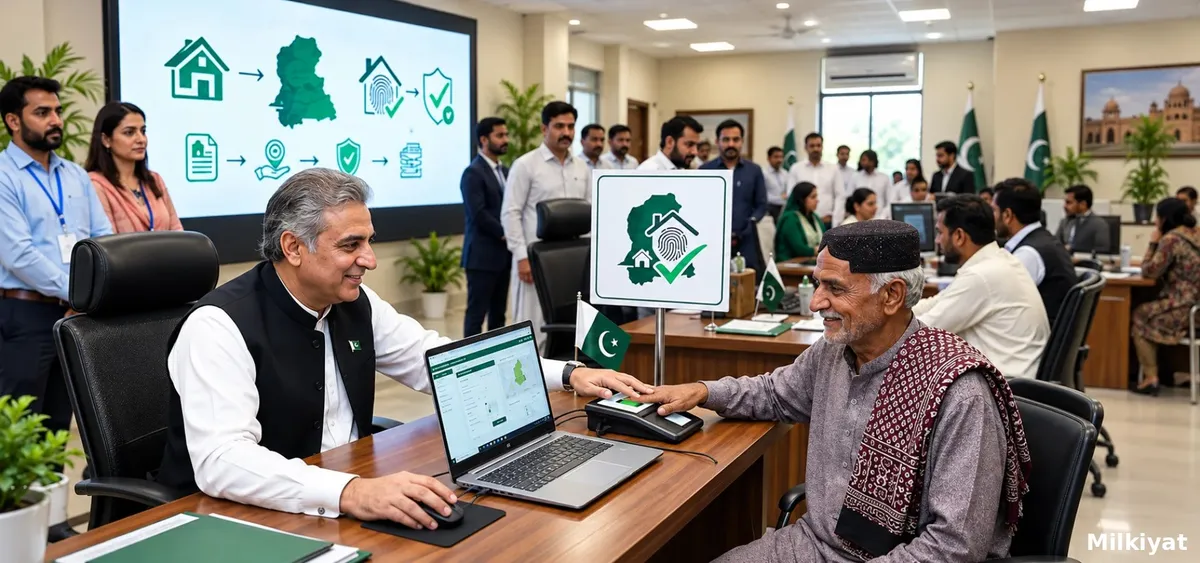
Under the new system, landowners will be able to access their property records online and carry out sale, purchase, gift, or other forms of transfer electronically, with only a single physical visit required for biometric verification rather than the multiple in person steps typically involved in the conventional registration and mutation process. A Property Card will also be generated for each holding as a formal digital record of ownership, intended to serve as a more easily verifiable proof of title than paper based revenue records have traditionally offered.
The Legal Framework Behind the Rollout
Alongside approving the system itself, the Sindh cabinet also approved supporting measures under the Transfer of Property Act and the Sindh Registration Act, together with a new set of Sindh e Conveyance Rules 2026 that will govern how electronic transfers are legally recognised and executed. Grounding the digital system in updated statutory rules, rather than treating it as a purely administrative or technical initiative, is what gives electronically generated Property Cards and e transfers the same legal standing as the paper based process they are intended to eventually replace.
Why Starting With Matiari and Sukkur Matters
Limiting the initial rollout to Matiari and Palijani in District Matiari and Deh Bagerji in District Sukkur, rather than launching province wide immediately, reflects a deliberate pilot approach built around localities where manual records had already been fully digitised in advance, reducing the risk of data quality problems undermining the system in its earliest and most closely watched phase. How smoothly this limited pilot runs is likely to shape both the pace and the design of any wider provincial rollout that follows.
What This Means for Sindh's Property Market
For buyers, sellers, and investors in property located within Sindh, a functioning digital title transfer system would represent a meaningful reduction in the time, paperwork, and fraud risk historically associated with land transactions in the province, particularly given how often disputes over land ownership in Sindh have stemmed from inconsistent or manipulated paper revenue records. Until the system expands beyond its current pilot localities, however, most transactions elsewhere in the province will continue under the existing registration and mutation process, and property buyers outside Matiari and Sukkur should not yet expect the new Property Card or fully electronic transfer option to be available to them.