News
Urban Flooding Warning Takes Effect Today in Major Property Markets

By Mariam Khan
Real Estate Analyst
4 min read
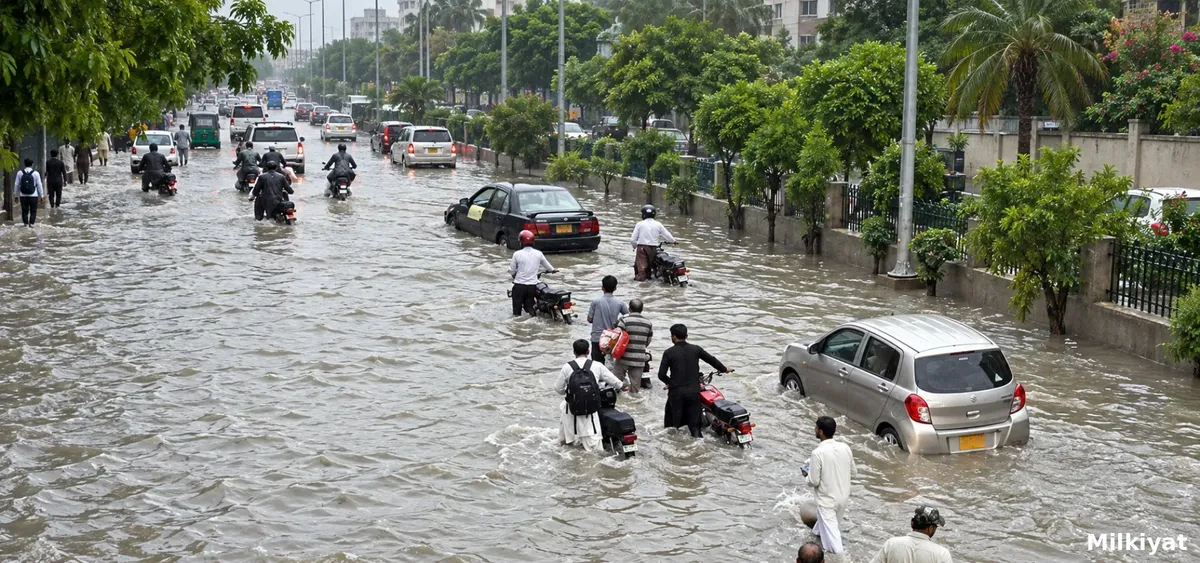
The Pakistan Meteorological Department has warned that heavy rain could trigger urban flooding in low-lying areas of Islamabad, Rawalpindi, Peshawar, Mardan, Swabi, Gujranwala, Gujrat, Sialkot, Faisalabad, and Lahore between 14 and 17 September 2026, in what officials are describing as the ninth and likely final monsoon spell of the season. A westerly wave is expected to enter Pakistan's upper regions and intensify specifically from 14 September onward.
The Full Scope of This Warning
Beyond urban flooding in these major cities, PMD has separately warned of flash flood risk in local streams and nullahs across Dir, Chitral, Swat, Kohistan, Shangla, Battagram, Buner, Malakand, Mansehra, Abbottabad, Gilgit-Baltistan, Kashmir, Murree, Galiyat, Islamabad, and Rawalpindi during the same forecast period. Landslides are also considered possible in hilly areas of Khyber Pakhtunkhwa, Gilgit-Baltistan, Murree, Galiyat, and Kashmir. Temperatures are expected to fall during this period as the weather system moves through.
What Provincial Disaster Authorities Have Already Done
Punjab's Provincial Disaster Management Authority has separately issued its own alert covering this same window, with Director General Saif Anwar Jappa specifically warning of potential urban flooding in Rawalpindi, Lahore, Gujranwala, and Faisalabad, alongside flash flooding risk in rainwater drains. Jappa directed all commissioners and deputy commissioners across Punjab to remain vigilant and ensure relevant departments are fully prepared, on the specific instructions of the Punjab Chief Minister. District administrations in major cities have been told to complete precautionary measures in advance given the urban flooding risk.
Why This Warning Carries Particular Weight This Season
This forecast lands at the end of a monsoon season that has already produced repeated, documented urban flooding and drainage failures across several of the same cities named in this warning, including Islamabad's Sector E-11, Rawalpindi's Nullah Lai corridor, and parts of Lahore. Given that documented drainage capacity issues and encroachment problems in specific vulnerable areas within these cities have not been fully resolved since those earlier episodes, this fresh warning represents a genuine test of whether interim mitigation measures taken since the last major flooding event have actually improved conditions on the ground.
What Remains Uncertain
The precise severity and exact timing of rainfall within the broader 14 to 17 September window will vary by specific location, and PMD's own advisory allows for this variation rather than predicting uniform impact across every named city. Given how quickly monsoon systems can shift in both timing and intensity, residents and authorities in the named cities should treat this as an active, developing situation requiring continued monitoring through the full window rather than a single, fixed event.
What This Means for Property in the Named Cities
Low-lying areas within Islamabad, Rawalpindi, Lahore, Gujranwala, Gujrat, Sialkot, and Faisalabad specifically carry elevated flood risk during this window, with particular relevance for any property located near a nullah, drain, or other waterway with a documented history of overflow or capacity issues. Property owners, tenants, and businesses in these areas should treat this warning as a direct, near term prompt to check drainage around their specific property, secure any construction sites against water accumulation, and avoid non-essential travel through known flood prone underpasses or low-lying roads during the forecast period. Given this season's repeated flooding episodes in specific, already identified vulnerable locations within several of these cities, property in or near those same locations should be treated with particular caution during this specific window.
What This Means for Ongoing Construction Projects
Contractors and developers with active construction sites in any of the named cities should treat this forecast as a direct prompt to review site drainage, secure loose materials and equipment, and ensure worker safety protocols account for the specific 14 to 17 September window, given the documented pattern of construction site flooding and related damage during comparable rainfall events earlier this same monsoon season.