News
Escalating Saudi-Houthi Conflict Raises Fresh Energy and Construction Cost Risk for Pakistan

By Mariam Khan
Real Estate Analyst
4 min read
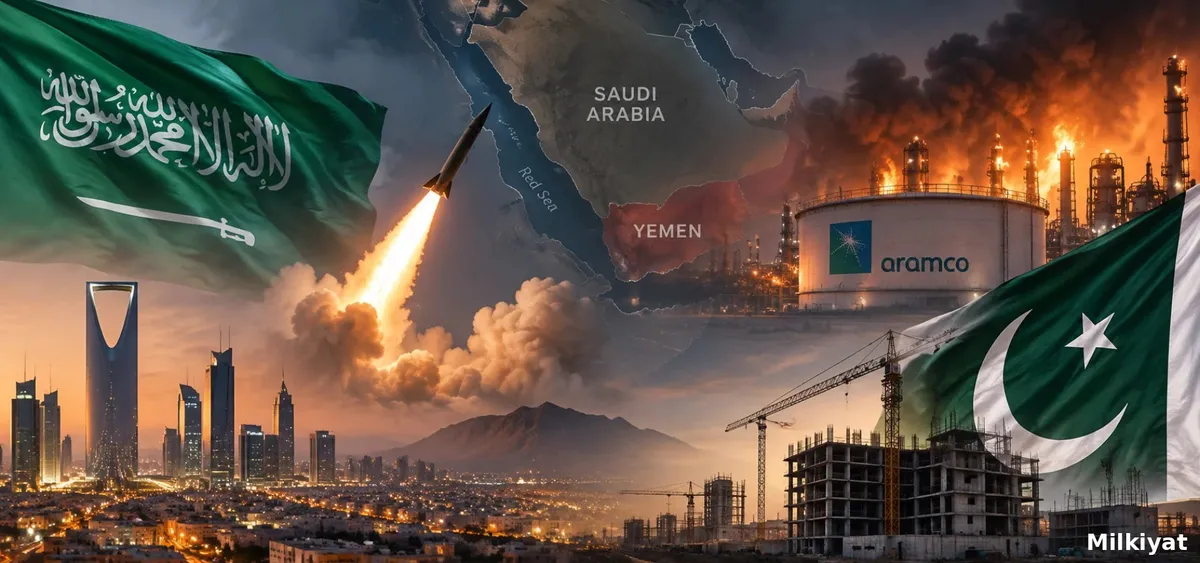
The United States has warned that renewed conflict between Saudi Arabia and Houthi forces could escalate rapidly, after Houthi forces launched ballistic missiles and drones targeting Riyadh on September 19, 2026, marking the first such strike on the Saudi capital since Yemen's civil war resumed. The development adds a fresh, direct threat to Gulf energy infrastructure on top of the regional supply disruptions already unsettling international oil markets this year.
What Actually Happened in the Attack
A Houthi military spokesman claimed two separate operations, one targeting what were described as sensitive sites in the Saudi capital, and a second strike on Aramco facilities in Yanbu, the same export terminal that had already been at the centre of an earlier pipeline attack disrupting Saudi crude exports this year. Saudi forces said they intercepted the missile aimed at Riyadh, though witnesses reported a fuel tank fire near King Khalid International Airport bearing Aramco's logo. The US State Department said the conflict has the potential to escalate rapidly and urged American citizens to seriously reconsider travel to the region, a notably stronger warning than routine regional advisories.
Why Yanbu Being Targeted Again Matters
This is not the first time Yanbu has featured in this year's disruptions to Saudi energy exports. We previously covered how Saudi Arabia's East West pipeline, which feeds this same Yanbu export terminal, was temporarily shut down earlier this year following a separate drone attack, an episode that pushed Brent crude above 109 dollars a barrel and contributed directly to the domestic fuel austerity measures Pakistan's government reintroduced in September. A fresh strike specifically targeting Aramco facilities at the same location suggests this export route remains a persistent target rather than having fully recovered from the earlier disruption, reinforcing rather than replacing the existing risk to Saudi crude supply.
Why This Sits Within a Longer, Already Volatile Conflict
This latest escalation is best understood as another chapter in a Gulf conflict that has been running since roughly February 2026 and has already produced dramatic, repeated swings in oil prices well beyond ordinary market volatility. The violence has already disrupted Saudi crude oil exports, the world's leading supply source, and maritime traffic through the Bab al Mandeb strait, a critical Red Sea chokepoint for global shipping and energy flows that Houthi forces separately targeted earlier this year by seizing strategic positions along the Yemeni coast. Given how consistently this conflict has produced fresh price spikes throughout the year, this attack should be read as a further escalation of an already active and unresolved crisis rather than the start of a new one.
Why Pakistan Carries Direct Exposure to This
Pakistan imports the large majority of its crude oil and refined petroleum products, meaning any sustained rise in international benchmarks tied to Gulf supply disruption translates fairly directly into higher import costs and pressure on domestic fuel prices. This exposure has already shown up in concrete policy responses this year, from the fuel austerity measures reintroduced after the earlier pipeline attack to the steady climb in domestic diesel prices that has weighed on transport and construction costs through September. A fresh escalation centred on the same export infrastructure raises the risk that this pressure continues rather than eases in the near term.
What This Means for Construction Costs and Development Timelines
Elevated or renewed volatility in international oil prices continues to affect Pakistan's construction sector through the same channels we have tracked throughout this conflict, higher fuel costs for transporting cement, steel, bricks, and other bulk materials, higher operating costs for diesel powered heavy machinery on active sites, and broader inflationary pressure that can complicate the path toward further monetary easing. This is an external risk originating from Gulf geopolitics rather than any change in Pakistani property policy, but developers and contractors currently budgeting projects should treat it as a genuine reason to maintain contingency for fuel and transport dependent costs, particularly given how quickly prices have moved in response to comparable events earlier this year.