News
Govt Orders Property Survey for Apna Ghar Loans, Islamabad to Pilot Mortgage-Eligible Plot System
News
News
Real Estate Analyst
5 min read
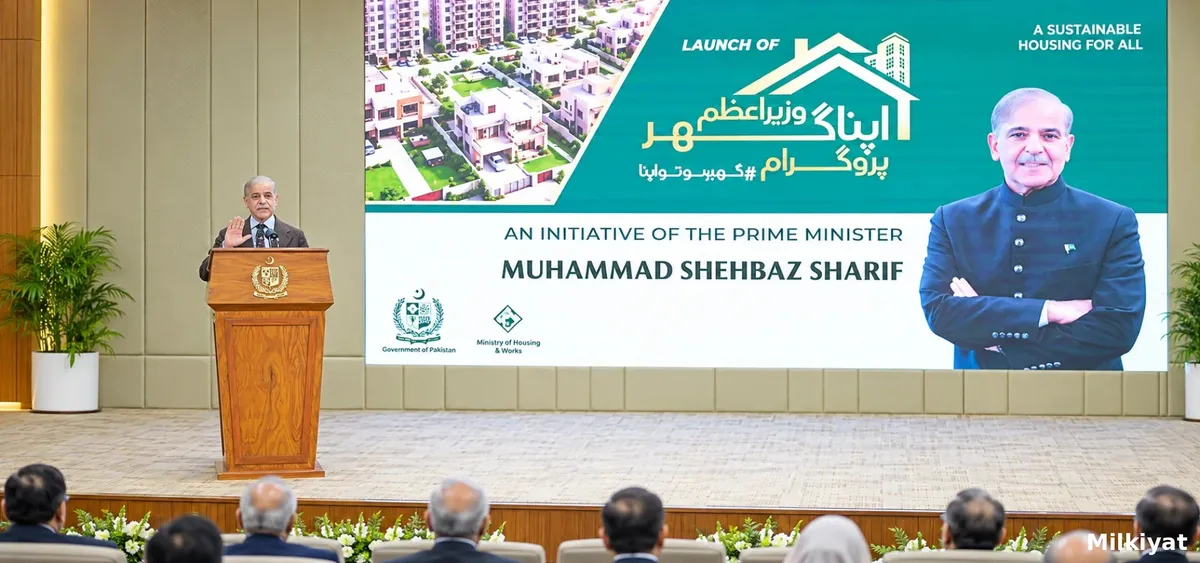
Prime Minister Shehbaz Sharif has directed the chief secretaries of all provinces, Azad Jammu and Kashmir, and Gilgit-Baltistan to conduct a comprehensive survey of properties that could qualify for bank financing under the Prime Minister's Apna Ghar Scheme, chairing a review meeting on the Access to Finance Plan 2026-28 in Islamabad on 9 September 2026.
Beyond the scheme's now familiar approval and disbursement figures, this meeting introduced a specific, structural initiative not previously part of Apna Ghar's public reporting: a system is being developed to identify plots across the entire country that meet mortgage requirements, with Islamabad selected as the pilot city for this exercise. A separate mechanism is also being developed specifically to involve established, well known housing developers directly in the programme, intended to further streamline how Apna Ghar financing actually connects with available residential projects.
Creating a formal, surveyed inventory of properties that meet mortgage requirements addresses a genuinely practical bottleneck in scaling any housing finance programme, since a bank approving financing is only useful to a borrower if a specific, eligible plot or property actually exists for that financing to be applied against. Piloting this system in Islamabad first suggests the government intends to test and refine the survey methodology and eligibility criteria in a single, more controlled setting before extending the exercise nationally across the provinces and territories chief secretaries have now been directed to survey.
The prime minister was informed that 147,504 applications have been received under the Apna Ghar Scheme to date, of which 53,127 have been approved, representing Rs313.42 billion in total approved financing. Actual disbursements have reached Rs45.43 billion across 8,739 applicants. As covered previously, this gap between approved financing and actual disbursement has been a consistent, ongoing feature of the programme's progress reports, and a reliable, surveyed inventory of mortgage eligible properties is precisely the kind of structural fix that could help close this gap, since one of the practical steps standing between approval and disbursement is confirming a specific, eligible property for the loan to actually finance.
The Senate Standing Committee on Housing and Works has directed NAB to investigate alleged annexation of Shamilaat and forest land in FGEHA Sky Gardens, also known as Green Enclave-II in Bhara Kahu, raising fresh concerns over the scheme’s unresolved land status
Punjab has launched land record services at Pakistan’s Embassy in Abu Dhabi and Consulate in Dubai, allowing overseas Pakistanis in the UAE to obtain Fards and access official Punjab property records without travelling to Pakistan.
The Federal Cabinet has approved the National Housing Policy 2025 and its Action Plan, introducing a new national framework focused on vertical housing, zoning compliance, energy efficiency, affordable housing finance and katchi abadi resettlement.
Punjab has prepared an Urban Water Management Plan targeting treatment of up to 930 million gallons of wastewater and surface water daily by 2029, while increasing the share of usable surface water in cities from 6% to 27% to reduce reliance on groundwater.
Real Estate Analyst
5 min read
Prime Minister Shehbaz Sharif has directed the chief secretaries of all provinces, Azad Jammu and Kashmir, and Gilgit-Baltistan to conduct a comprehensive survey of properties that could qualify for bank financing under the Prime Minister's Apna Ghar Scheme, chairing a review meeting on the Access to Finance Plan 2026-28 in Islamabad on 9 September 2026.
Beyond the scheme's now familiar approval and disbursement figures, this meeting introduced a specific, structural initiative not previously part of Apna Ghar's public reporting: a system is being developed to identify plots across the entire country that meet mortgage requirements, with Islamabad selected as the pilot city for this exercise. A separate mechanism is also being developed specifically to involve established, well known housing developers directly in the programme, intended to further streamline how Apna Ghar financing actually connects with available residential projects.
Creating a formal, surveyed inventory of properties that meet mortgage requirements addresses a genuinely practical bottleneck in scaling any housing finance programme, since a bank approving financing is only useful to a borrower if a specific, eligible plot or property actually exists for that financing to be applied against. Piloting this system in Islamabad first suggests the government intends to test and refine the survey methodology and eligibility criteria in a single, more controlled setting before extending the exercise nationally across the provinces and territories chief secretaries have now been directed to survey.
The prime minister was informed that 147,504 applications have been received under the Apna Ghar Scheme to date, of which 53,127 have been approved, representing Rs313.42 billion in total approved financing. Actual disbursements have reached Rs45.43 billion across 8,739 applicants. As covered previously, this gap between approved financing and actual disbursement has been a consistent, ongoing feature of the programme's progress reports, and a reliable, surveyed inventory of mortgage eligible properties is precisely the kind of structural fix that could help close this gap, since one of the practical steps standing between approval and disbursement is confirming a specific, eligible property for the loan to actually finance.
The Senate Standing Committee on Housing and Works has directed NAB to investigate alleged annexation of Shamilaat and forest land in FGEHA Sky Gardens, also known as Green Enclave-II in Bhara Kahu, raising fresh concerns over the scheme’s unresolved land status
Punjab has launched land record services at Pakistan’s Embassy in Abu Dhabi and Consulate in Dubai, allowing overseas Pakistanis in the UAE to obtain Fards and access official Punjab property records without travelling to Pakistan.
The Federal Cabinet has approved the National Housing Policy 2025 and its Action Plan, introducing a new national framework focused on vertical housing, zoning compliance, energy efficiency, affordable housing finance and katchi abadi resettlement.
Punjab has prepared an Urban Water Management Plan targeting treatment of up to 930 million gallons of wastewater and surface water daily by 2029, while increasing the share of usable surface water in cities from 6% to 27% to reduce reliance on groundwater.
Developing a formal mechanism to involve renowned housing developers in the Apna Ghar process signals a shift toward connecting subsidised mortgage finance more directly with actual residential project supply, rather than leaving borrowers to separately locate an eligible property on their own after securing loan approval. If implemented effectively, this could streamline the path from loan approval to actual home purchase or construction by pairing approved financing with developer supplied inventory already confirmed to meet the programme's eligibility standards.
This housing specific direction came within a wider review of Pakistan's Access to Finance Plan 2026-28, which also covered agricultural and small and medium enterprise lending. The meeting was told bank lending to the agricultural sector stood at Rs1.268 trillion as of August 2026, against a Rs2 trillion target set for June 2028, while SME sector lending stood at Rs1.067 trillion against the same Rs2 trillion target and timeline. The meeting was attended by Deputy Prime Minister and Foreign Minister Muhammad Ishaq Dar, federal ministers including Ahad Khan Cheema, Rana Tanveer Hussain, and Muhammad Aurangzeb, State Bank Governor Jameel Ahmad, the chief secretaries of the provinces and territories, and senior bank executives, reflecting the genuinely broad, cross institutional scope of this financing review.
No specific timeline has been given for completing the Islamabad pilot, nor for when the mortgage eligible plot identification system might extend to other provinces following that pilot. The specific mechanism for involving housing developers, including eligibility criteria for participating developers and how their inventory would be matched with approved Apna Ghar borrowers, has also not been detailed.
Given Islamabad's selection as the pilot city, property owners and developers in the capital should expect to see the practical mechanics of this mortgage eligible plot identification system emerge first, ahead of other provinces. Developers in Islamabad specifically should watch for details on how to participate in the parallel mechanism being developed to connect established housing developers directly with the Apna Ghar programme, since early involvement in a pilot phase could position participating developers favourably as the system is refined and potentially extended nationally.
Applicants and prospective borrowers under the Apna Ghar Scheme should treat this survey and developer engagement initiative as a signal that the government is actively working to address the practical property identification bottleneck that has contributed to the gap between loan approval and actual disbursement. Borrowers with an already approved application should continue to monitor for updates on how these systems might simplify their own path to a specific, eligible property, particularly once the Islamabad pilot produces results that could inform how the system operates nationally.
Developing a formal mechanism to involve renowned housing developers in the Apna Ghar process signals a shift toward connecting subsidised mortgage finance more directly with actual residential project supply, rather than leaving borrowers to separately locate an eligible property on their own after securing loan approval. If implemented effectively, this could streamline the path from loan approval to actual home purchase or construction by pairing approved financing with developer supplied inventory already confirmed to meet the programme's eligibility standards.
This housing specific direction came within a wider review of Pakistan's Access to Finance Plan 2026-28, which also covered agricultural and small and medium enterprise lending. The meeting was told bank lending to the agricultural sector stood at Rs1.268 trillion as of August 2026, against a Rs2 trillion target set for June 2028, while SME sector lending stood at Rs1.067 trillion against the same Rs2 trillion target and timeline. The meeting was attended by Deputy Prime Minister and Foreign Minister Muhammad Ishaq Dar, federal ministers including Ahad Khan Cheema, Rana Tanveer Hussain, and Muhammad Aurangzeb, State Bank Governor Jameel Ahmad, the chief secretaries of the provinces and territories, and senior bank executives, reflecting the genuinely broad, cross institutional scope of this financing review.
No specific timeline has been given for completing the Islamabad pilot, nor for when the mortgage eligible plot identification system might extend to other provinces following that pilot. The specific mechanism for involving housing developers, including eligibility criteria for participating developers and how their inventory would be matched with approved Apna Ghar borrowers, has also not been detailed.
Given Islamabad's selection as the pilot city, property owners and developers in the capital should expect to see the practical mechanics of this mortgage eligible plot identification system emerge first, ahead of other provinces. Developers in Islamabad specifically should watch for details on how to participate in the parallel mechanism being developed to connect established housing developers directly with the Apna Ghar programme, since early involvement in a pilot phase could position participating developers favourably as the system is refined and potentially extended nationally.
Applicants and prospective borrowers under the Apna Ghar Scheme should treat this survey and developer engagement initiative as a signal that the government is actively working to address the practical property identification bottleneck that has contributed to the gap between loan approval and actual disbursement. Borrowers with an already approved application should continue to monitor for updates on how these systems might simplify their own path to a specific, eligible property, particularly once the Islamabad pilot produces results that could inform how the system operates nationally.
