News
KP Emergency: Federal Government Deploys Army and Establishes Advisory Council

By Mariam Khan
Real Estate Analyst
3 min read
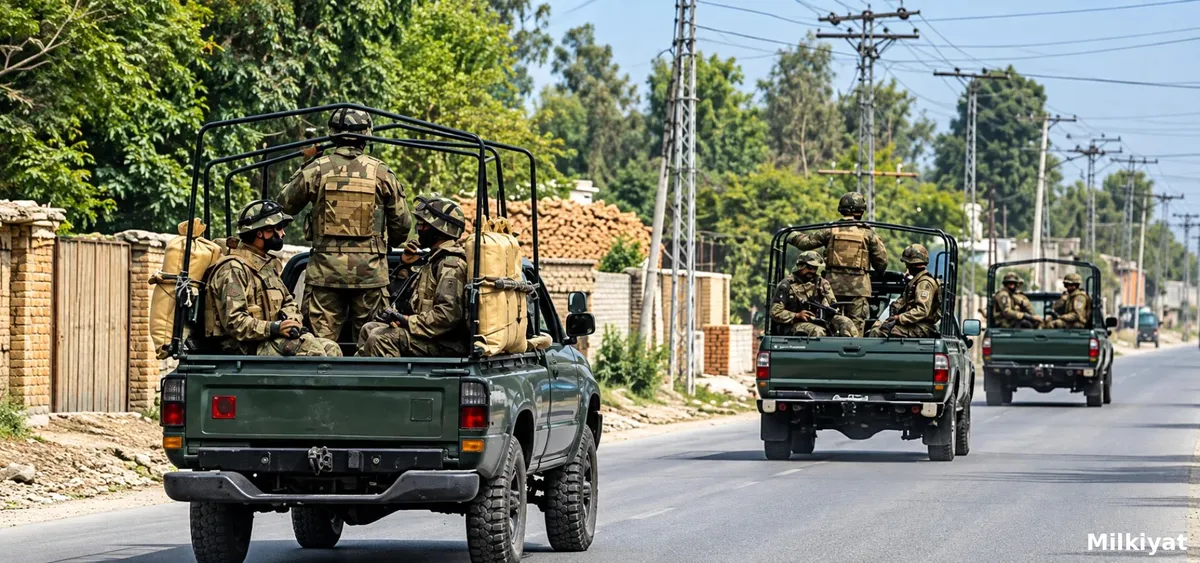
The federal government has authorised the deployment of Pakistan Army personnel in Khyber Pakhtunkhwa and established an 11 member Advisory Council to assist the governor in running provincial affairs during the emergency.
The army deployment has been authorised under Article 245 of the Constitution, while the Advisory Council is intended to support the governor in administrative and security related matters.
For the property and development sector, the main issue is how the new administrative structure could affect project approvals, infrastructure decisions and business activity across the province.
What Article 245 Allows
The Constitution of Pakistan states under Article 245 that the armed forces may act in aid of civil power when directed by the federal government.
In the current situation, the deployment is intended to support civil administration and security in Khyber Pakhtunkhwa.
For property markets, the deployment does not itself change ownership rights, land transfer procedures or construction regulations.
There is currently no confirmed province wide suspension of property transfers, housing scheme approvals or building permits linked to the deployment.
Advisory Council Begins Work
The Governor House Khyber Pakhtunkhwa confirmed that Governor Faisal Karim Kundi chaired the first meeting of the Advisory Council on October 11.
The meeting included senior provincial officials and council members and focused primarily on security, administrative coordination and the government's response to terrorism.
The creation of the council means important provincial decisions will now be handled through a different administrative structure during the emergency period.
Why This Matters for Development Projects
Changes in administration can affect the pace of government decision making.
Infrastructure schemes, public development projects and approvals that require provincial departments may face delays if responsibilities are reassigned or files move through new administrative channels.
The Governor House security update also shows that authorities are reviewing security arrangements, communications and movement restrictions.
For construction companies and developers, temporary road restrictions or heightened security can affect the movement of labour, equipment and building materials.
However, there is no official confirmation that ongoing development projects have been cancelled or formally suspended.
What Property Investors Should Watch
Property buyers and developers should monitor official notices from provincial departments, development authorities and land agencies for any changes to transfer procedures, approvals or office operations.
The strongest short term impact is likely to come through uncertainty, logistics and slower administrative processing rather than changes in property ownership rules.
Investors should therefore distinguish between security related restrictions and formal changes to real estate regulation.
For continued coverage of political developments affecting infrastructure and property markets, readers can follow Milkiyat.