News
LNG Shock Puts Pakistan's Energy Costs Under Additional Pressure

By Mariam Khan
Real Estate Analyst
5 min read
ShareWhatsApp
Milkiyat.com is operated by MILKIYAT.COM ONLINE PORTAL (PRIVATE) LIMITED.
Corporate Unique Identification No. (CUI): 0337118
Incorporated under the Companies Act, 2017, Pakistan.
News
By Mariam Khan
Real Estate Analyst
5 min read
News
By Mariam Khan
Real Estate Analyst
5 min read
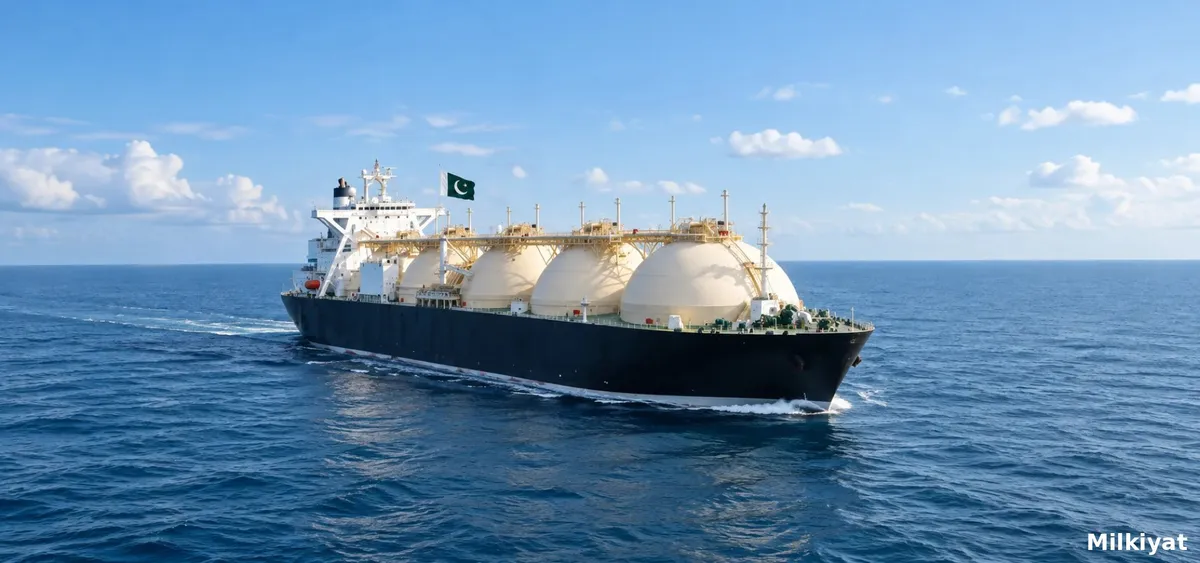
The Middle East conflict has disrupted global LNG markets on a genuinely severe scale, with tanker traffic through the Strait of Hormuz effectively halted at points during the crisis and close to 20 percent of global LNG supply temporarily removed from the market at the disruption's peak, according to the International Energy Agency's own quarterly Gas Market Reports. Asian spot LNG prices have surged sharply as a direct result, reaching levels last seen during the 2022-23 global energy crisis.
According to the IEA's own data, Pakistan is among the markets most significantly affected by this disruption. In 2025, Qatar alone accounted for 25 percent of Pakistan's total primary gas supply and fully 98 percent of the country's LNG imports specifically, an extraordinary degree of concentration in a single supplier that left Pakistan disproportionately exposed once the Strait of Hormuz disruption began. Pakistan's LNG inflows plummeted 67 percent year on year in March, the sharpest impact recorded among the major Asian LNG importing markets tracked by the IEA.
This disruption arrived at a genuinely unusual moment in Pakistan's own LNG position. As recently as January 2026, Pakistan actually had an LNG surplus, with average LNG plant utilisation running below minimum dispatch levels and the government diverting excess cargoes to other markets, a consequence of rigid, long term supply contracts that had left the country over-committed relative to actual demand. This means Pakistan moved from actively managing a surplus to confronting a severe supply and price shock within the space of just a couple of months, a whiplash that reflects how suddenly this Middle East driven disruption reshaped global LNG market conditions.
Facing this disruption, Pakistan's government has curtailed gas supplies and increased dispatch from coal, hydropower, and nuclear generation instead, combining load shedding, demand side conservation measures, tariff adjustments, and maximised output from non-gas generation sources. At one particularly acute point during renewed escalation, Pakistan reportedly cancelled an emergency LNG procurement tender entirely because the bids received were considered excessively expensive, a direct illustration of how far spot prices had moved beyond levels the country was willing to pay even amid a genuine supply shortage.
Beyond the immediate disruption, the IEA has warned that damage to LNG liquefaction infrastructure in Qatar specifically is set to reduce projected supply growth and delay the anticipated global LNG expansion wave by at least two years, with the combined effect of short term supply losses and slower capacity growth potentially resulting in a cumulative loss of around 120 billion cubic metres of LNG supply between 2026 and 2030. This suggests elevated price pressure and supply uncertainty affecting markets like Pakistan may not be a purely short term phenomenon tied to the conflict's immediate duration.
This LNG specific pressure represents a genuinely separate energy cost risk from the petrol and diesel price increases already affecting Pakistan's construction sector, since it operates through electricity generation and gas tariffs rather than direct fuel and transport costs. Persistently expensive imported LNG directly affects the cost of gas fired electricity generation and domestic gas tariffs, both of which feed into industrial energy costs, including energy intensive construction material manufacturing, and the ongoing operating costs of residential and commercial property connected to the gas network.
Whether LNG demand and pricing genuinely normalise once the underlying Middle East conflict eases, as some market analysts expect, or whether the medium term supply damage the IEA has flagged in Qatar keeps prices structurally elevated for longer, remains a genuinely open question. Given how quickly Pakistan's own position shifted from surplus to shortage once this crisis began, readers should treat the current price environment as inherently unstable rather than a fixed, predictable new baseline.
Sustained high LNG prices, if they persist, could meaningfully raise costs for gas dependent construction material producers, including cement and other energy intensive manufacturers, while also increasing electricity generation costs more broadly given gas's role in Pakistan's power mix. Developers and property owners should treat this LNG specific pressure as an additional, distinct energy cost risk layered on top of the petrol and diesel volatility already affecting the sector, rather than assuming these represent the same underlying risk. Property occupants connected to the domestic gas network specifically should watch for potential gas tariff adjustments tied to this ongoing LNG market disruption as a further, direct operating cost factor worth monitoring.
RDA inflows reached $14.906 billion in August, reflecting stronger overseas investment and growing confidence in Pakistan’s real estate and development sector.
Up to 50mm of rain hit Islamabad as CDA teams carried out dewatering and drainage operations at waterlogging points, highlighting the capital’s recurring monsoon drainage problems.
Pakistan’s FX reserves have climbed to a record $21.4 billion after the $3 billion Eurobond inflow, strengthening the outlook for currency and import-cost stability.
Rawalpindi Cantonment has reduced the planned residential property tax hike to 20%, with instalment relief and surcharge waivers for homeowners.
The Middle East conflict has disrupted global LNG markets on a genuinely severe scale, with tanker traffic through the Strait of Hormuz effectively halted at points during the crisis and close to 20 percent of global LNG supply temporarily removed from the market at the disruption's peak, according to the International Energy Agency's own quarterly Gas Market Reports. Asian spot LNG prices have surged sharply as a direct result, reaching levels last seen during the 2022-23 global energy crisis.
According to the IEA's own data, Pakistan is among the markets most significantly affected by this disruption. In 2025, Qatar alone accounted for 25 percent of Pakistan's total primary gas supply and fully 98 percent of the country's LNG imports specifically, an extraordinary degree of concentration in a single supplier that left Pakistan disproportionately exposed once the Strait of Hormuz disruption began. Pakistan's LNG inflows plummeted 67 percent year on year in March, the sharpest impact recorded among the major Asian LNG importing markets tracked by the IEA.
This disruption arrived at a genuinely unusual moment in Pakistan's own LNG position. As recently as January 2026, Pakistan actually had an LNG surplus, with average LNG plant utilisation running below minimum dispatch levels and the government diverting excess cargoes to other markets, a consequence of rigid, long term supply contracts that had left the country over-committed relative to actual demand. This means Pakistan moved from actively managing a surplus to confronting a severe supply and price shock within the space of just a couple of months, a whiplash that reflects how suddenly this Middle East driven disruption reshaped global LNG market conditions.
Facing this disruption, Pakistan's government has curtailed gas supplies and increased dispatch from coal, hydropower, and nuclear generation instead, combining load shedding, demand side conservation measures, tariff adjustments, and maximised output from non-gas generation sources. At one particularly acute point during renewed escalation, Pakistan reportedly cancelled an emergency LNG procurement tender entirely because the bids received were considered excessively expensive, a direct illustration of how far spot prices had moved beyond levels the country was willing to pay even amid a genuine supply shortage.
Beyond the immediate disruption, the IEA has warned that damage to LNG liquefaction infrastructure in Qatar specifically is set to reduce projected supply growth and delay the anticipated global LNG expansion wave by at least two years, with the combined effect of short term supply losses and slower capacity growth potentially resulting in a cumulative loss of around 120 billion cubic metres of LNG supply between 2026 and 2030. This suggests elevated price pressure and supply uncertainty affecting markets like Pakistan may not be a purely short term phenomenon tied to the conflict's immediate duration.
This LNG specific pressure represents a genuinely separate energy cost risk from the petrol and diesel price increases already affecting Pakistan's construction sector, since it operates through electricity generation and gas tariffs rather than direct fuel and transport costs. Persistently expensive imported LNG directly affects the cost of gas fired electricity generation and domestic gas tariffs, both of which feed into industrial energy costs, including energy intensive construction material manufacturing, and the ongoing operating costs of residential and commercial property connected to the gas network.
Whether LNG demand and pricing genuinely normalise once the underlying Middle East conflict eases, as some market analysts expect, or whether the medium term supply damage the IEA has flagged in Qatar keeps prices structurally elevated for longer, remains a genuinely open question. Given how quickly Pakistan's own position shifted from surplus to shortage once this crisis began, readers should treat the current price environment as inherently unstable rather than a fixed, predictable new baseline.
Sustained high LNG prices, if they persist, could meaningfully raise costs for gas dependent construction material producers, including cement and other energy intensive manufacturers, while also increasing electricity generation costs more broadly given gas's role in Pakistan's power mix. Developers and property owners should treat this LNG specific pressure as an additional, distinct energy cost risk layered on top of the petrol and diesel volatility already affecting the sector, rather than assuming these represent the same underlying risk. Property occupants connected to the domestic gas network specifically should watch for potential gas tariff adjustments tied to this ongoing LNG market disruption as a further, direct operating cost factor worth monitoring.
RDA inflows reached $14.906 billion in August, reflecting stronger overseas investment and growing confidence in Pakistan’s real estate and development sector.
Up to 50mm of rain hit Islamabad as CDA teams carried out dewatering and drainage operations at waterlogging points, highlighting the capital’s recurring monsoon drainage problems.
Pakistan’s FX reserves have climbed to a record $21.4 billion after the $3 billion Eurobond inflow, strengthening the outlook for currency and import-cost stability.
Rawalpindi Cantonment has reduced the planned residential property tax hike to 20%, with instalment relief and surcharge waivers for homeowners.