News
Pakistan's FX Reserves Hit Record $21.4bn After $3bn Eurobond Inflow
Milkiyat.com is operated by MILKIYAT.COM ONLINE PORTAL (PRIVATE) LIMITED.
Corporate Unique Identification No. (CUI): 0337118
Incorporated under the Companies Act, 2017, Pakistan.
Real Estate Analyst
4 min read
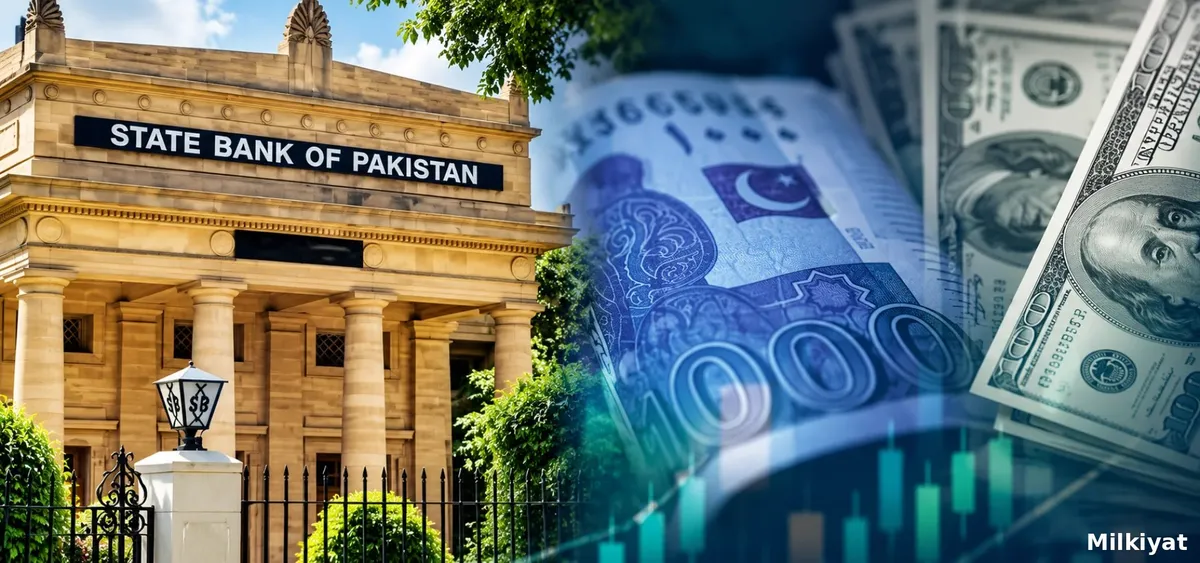
State Bank of Pakistan reserves climbed to an all-time high of $21.4 billion, according to SBP's own monetary policy statement, which attributed the increase directly to Pakistan's recent $3 billion Eurobond issuance combined with significant SBP foreign exchange purchases. This is directly connected to Pakistan's record Eurobond issuance already covered by milkiyat.com, which attracted nearly $6 billion in investor demand against the $3 billion Pakistan ultimately accepted.
SBP had set a target of $20.2 billion for December 2026, a level the central bank has now surpassed months early. The bank had separately, and successfully, met its end June 2026 target of $18 billion. According to one market analyst, this level also surpasses the $21 billion target SBP had originally set for June 2027, meaning reserves have now reached a milestone the bank had not expected to hit for close to another year.
SBP projects reserves will continue climbing toward a three month import cover benchmark by the end of June 2027, supported by realisation of planned financial inflows and continued SBP foreign exchange purchases. The bank expects workers' remittances to cross $44 billion for the fiscal year based on growth already recorded in its first two months, while exports are projected to come in slightly above $32 billion for FY27. On debt servicing, SBP noted total external debt servicing for FY27 stands at $21.5 billion, of which $11 billion is net repayable after adjusting for rollovers and refinancing, with $3.5 billion already repaid so far this year.
SBP explicitly warned that this positive outlook remains susceptible to elevated global commodity prices and supply constraints tied to the unfolding situation in the Middle East, the same conflict that has been driving sustained volatility in oil and gas markets throughout the year. This caveat is directly relevant given the scale of Pakistan's exposure to imported energy costs, meaning the reserves milestone itself does not eliminate the underlying vulnerability to continued Middle East driven price shocks.
Real Estate Analyst
4 min read
State Bank of Pakistan reserves climbed to an all-time high of $21.4 billion, according to SBP's own monetary policy statement, which attributed the increase directly to Pakistan's recent $3 billion Eurobond issuance combined with significant SBP foreign exchange purchases. This is directly connected to Pakistan's record Eurobond issuance already covered by milkiyat.com, which attracted nearly $6 billion in investor demand against the $3 billion Pakistan ultimately accepted.
SBP had set a target of $20.2 billion for December 2026, a level the central bank has now surpassed months early. The bank had separately, and successfully, met its end June 2026 target of $18 billion. According to one market analyst, this level also surpasses the $21 billion target SBP had originally set for June 2027, meaning reserves have now reached a milestone the bank had not expected to hit for close to another year.
SBP projects reserves will continue climbing toward a three month import cover benchmark by the end of June 2027, supported by realisation of planned financial inflows and continued SBP foreign exchange purchases. The bank expects workers' remittances to cross $44 billion for the fiscal year based on growth already recorded in its first two months, while exports are projected to come in slightly above $32 billion for FY27. On debt servicing, SBP noted total external debt servicing for FY27 stands at $21.5 billion, of which $11 billion is net repayable after adjusting for rollovers and refinancing, with $3.5 billion already repaid so far this year.
SBP explicitly warned that this positive outlook remains susceptible to elevated global commodity prices and supply constraints tied to the unfolding situation in the Middle East, the same conflict that has been driving sustained volatility in oil and gas markets throughout the year. This caveat is directly relevant given the scale of Pakistan's exposure to imported energy costs, meaning the reserves milestone itself does not eliminate the underlying vulnerability to continued Middle East driven price shocks.
Stronger reserves reduce near term pressure on the rupee and on the cost of imported construction inputs, including machinery and equipment that developers and contractors rely on. Greater currency stability arising from a healthier reserves position can also improve investor confidence and make development cost forecasting meaningfully easier, since currency volatility has historically been one of the harder to predict inputs into construction budgeting. That said, elevated oil prices, driven by the same Middle East conflict SBP itself flagged as a risk, remain a significant counter-risk capable of offsetting some of this benefit, particularly given Pakistan's heavy reliance on imported fuel.
Whether reserves continue climbing toward the three month import cover target SBP has set for June 2027 depends heavily on the trajectory of the Middle East conflict and its effect on both oil and gas prices, alongside continued realisation of the remittance and export growth SBP is currently projecting. Given how directly this same conflict has already driven sharp swings in global energy markets this year, this reserves milestone should be read as a genuine, positive achievement rather than a guarantee that currency and import cost stability will continue uninterrupted.
Property investors and developers should treat this reserves milestone as a genuinely positive signal for near term currency stability and import cost predictability, supporting more confident development cost forecasting than a weaker reserves position would allow. At the same time, given SBP's own explicit caveat about Middle East driven commodity price risk, developers relying on imported machinery, equipment, or construction materials should continue building contingency into cost projections rather than assuming currency and import cost stability is now fully secured.
Stronger reserves reduce near term pressure on the rupee and on the cost of imported construction inputs, including machinery and equipment that developers and contractors rely on. Greater currency stability arising from a healthier reserves position can also improve investor confidence and make development cost forecasting meaningfully easier, since currency volatility has historically been one of the harder to predict inputs into construction budgeting. That said, elevated oil prices, driven by the same Middle East conflict SBP itself flagged as a risk, remain a significant counter-risk capable of offsetting some of this benefit, particularly given Pakistan's heavy reliance on imported fuel.
Whether reserves continue climbing toward the three month import cover target SBP has set for June 2027 depends heavily on the trajectory of the Middle East conflict and its effect on both oil and gas prices, alongside continued realisation of the remittance and export growth SBP is currently projecting. Given how directly this same conflict has already driven sharp swings in global energy markets this year, this reserves milestone should be read as a genuine, positive achievement rather than a guarantee that currency and import cost stability will continue uninterrupted.
Property investors and developers should treat this reserves milestone as a genuinely positive signal for near term currency stability and import cost predictability, supporting more confident development cost forecasting than a weaker reserves position would allow. At the same time, given SBP's own explicit caveat about Middle East driven commodity price risk, developers relying on imported machinery, equipment, or construction materials should continue building contingency into cost projections rather than assuming currency and import cost stability is now fully secured.
RDA inflows reached $14.906 billion in August, reflecting stronger overseas investment and growing confidence in Pakistan’s real estate and development sector.
Up to 50mm of rain hit Islamabad as CDA teams carried out dewatering and drainage operations at waterlogging points, highlighting the capital’s recurring monsoon drainage problems.
Pakistan’s LNG supply shock is increasing pressure on gas, electricity and construction costs, adding another major risk for developers, businesses and property owners.
Rawalpindi Cantonment has reduced the planned residential property tax hike to 20%, with instalment relief and surcharge waivers for homeowners.
RDA inflows reached $14.906 billion in August, reflecting stronger overseas investment and growing confidence in Pakistan’s real estate and development sector.
Up to 50mm of rain hit Islamabad as CDA teams carried out dewatering and drainage operations at waterlogging points, highlighting the capital’s recurring monsoon drainage problems.
Pakistan’s LNG supply shock is increasing pressure on gas, electricity and construction costs, adding another major risk for developers, businesses and property owners.
Rawalpindi Cantonment has reduced the planned residential property tax hike to 20%, with instalment relief and surcharge waivers for homeowners.
