News
CDA Fails to Award Land Six Years After Accepting Rs4 Billion Payment From PIDE

By Bibi Masooma
Real Estate Analyst
7 min read
ShareWhatsApp
News
By Bibi Masooma
Real Estate Analyst
7 min read
News
By Bibi Masooma
Real Estate Analyst
7 min read
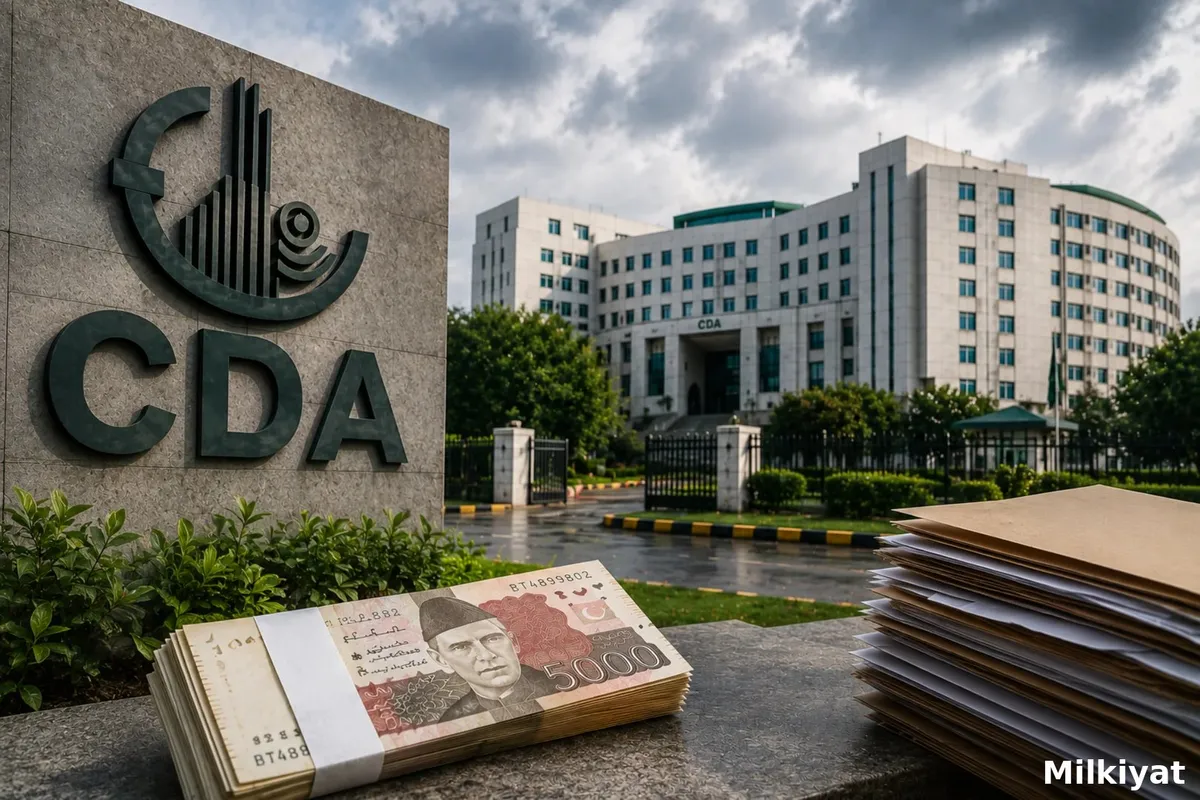
The Capital Development Authority (CDA) has yet to award land to the Pakistan Institute of Development Economics (PIDE), nearly six years after the institution paid approximately Rs4 billion for the purpose, prompting federal authorities to demand an immediate resolution of the long-standing issue.
Federal Minister for Planning, Development and Special Initiatives Ahsan Iqbal raised the matter during a meeting on Thursday, September 3, 2026, while reviewing progress on several development projects. During the meeting, the minister directed the CDA to either provide PIDE with the required land without further delay or return the money deposited by the institution.
The issue has remained unresolved despite PIDE pursuing the matter with the CDA since 2022. According to the official government account, legal and ownership-related complications associated with land identified for the institution have contributed to the prolonged delay, preventing the allocation from being completed.
PIDE deposited approximately Rs4 billion with CDA between 2017 and 2020 for the acquisition of land. However, despite the substantial payment and the passage of several years, the institution has not received a suitable site that can be formally handed over for its intended use.
The situation highlights the financial consequences that can arise when land transactions remain unresolved for extended periods. For an institution such as PIDE, the availability of a permanent and legally clear site is important for long-term planning, development and institutional expansion.
The prolonged delay also raises questions about the processes involved in identifying and transferring public-sector land. Before a plot can be handed over, authorities must ensure that ownership is established and that there are no legal restrictions preventing its transfer.
According to the government's September 3 statement, land identified or allocated for PIDE has repeatedly faced legal or ownership-related encumbrances. These complications have prevented the authority from completing a straightforward handover.
Land-related legal issues can arise from disputed ownership, incomplete title documentation, competing claims or other restrictions affecting the authority's ability to transfer a property. Until such matters are resolved, even an otherwise suitable plot may not be legally available for possession.
For property buyers and investors, the PIDE case underlines the importance of verifying the legal status of land before making significant financial commitments. A property's location and allocation status alone do not guarantee that possession or transfer can be completed without complications.
The Planning Ministry said PIDE has been following up with the CDA since 2022, but the matter has not reached a viable conclusion. The prolonged correspondence and lack of a final resolution eventually brought the issue to the attention of the federal government.
The latest direction from the Planning Minister puts the responsibility on CDA to settle the matter. If the authority can provide legally clear and suitable land, the allocation should proceed. If suitable land cannot be provided, the approximately Rs4 billion deposited by PIDE should be returned.
This creates a clear path forward after years of uncertainty and prevents the institution's funds from remaining tied up without the delivery of the intended asset.
Although the issue involves two public-sector institutions, its implications extend beyond PIDE and CDA. Islamabad's property market includes a wide range of government-owned land, institutional plots, residential developments and commercial projects, making legal clarity an important consideration for investors.
The case demonstrates that a land transaction can face significant delays even after payment has been made if ownership or legal issues remain unresolved. For buyers, this reinforces the need to examine title documents, ownership records, approved land use, encumbrances and possession conditions before completing a purchase.
For developers and institutions, it also highlights the importance of ensuring that land is legally transferable before major financial commitments are made.
The federal government's intervention indicates that the PIDE-CDA dispute is no longer expected to remain open-ended. Ahsan Iqbal directed the authority to either provide the required land or refund PIDE's money, giving CDA a clear route toward resolving the matter.
The direction could also put greater focus on the procedures used for public-sector land allocation. When a large payment remains linked to an incomplete transaction for years, both the institution making the payment and the authority responsible for the land face financial and administrative uncertainty.
Resolving the matter would provide PIDE with greater certainty while allowing CDA to close a transaction that has remained pending for several years.
The PIDE land issue was discussed during a broader meeting reviewing the progress of several development projects. The meeting also covered the Kachhi Canal Phase-II project, delays affecting the Loralai-Zhob road, and the Allama Iqbal Memorial and Iqbal Library project.
The minister called for timely progress, improved implementation and compliance with relevant standards. Authorities were also directed to address delays affecting development projects and ensure that ongoing schemes move forward according to approved plans.
The inclusion of the PIDE land matter in the review reflects the government's broader focus on resolving administrative bottlenecks affecting public-sector development and institutional projects.
The dispute offers a wider lesson for property buyers in Pakistan: payment and allocation are not the same as secure ownership or possession.
Before purchasing land, buyers should verify who legally owns the property, whether the title is clear, whether the property has any outstanding claims or encumbrances, whether its intended use has been approved and whether the relevant authority can legally transfer possession.
These checks become particularly important for high-value transactions. A buyer may commit substantial funds to a property, but unresolved legal issues can delay possession or create complications long after payment has been made.
The PIDE case therefore highlights the importance of due diligence and legal verification at every stage of a property transaction.
The CDA's failure to complete the land allocation to PIDE nearly six years after receiving approximately Rs4 billion has now prompted direct federal intervention. With the Planning Minister directing CDA to either provide the required land or return PIDE's money, the long-running matter has reached a point where a clear resolution is expected.
The case is also relevant to Islamabad's broader property market because it demonstrates the importance of legal clarity, ownership verification and secure possession in land transactions. For buyers and investors, the lesson is straightforward: a property should not be considered secure simply because payment has been made or an allocation has been issued.
The next step now rests with CDA, which must determine whether it can provide PIDE with legally clear and suitable land or proceed with refunding the approximately Rs4 billion paid by the institution.
Master plan violations, narrowed drainage channels and encroachments on natural nullahs are contributing to worsening flooding in Islamabad. CDA now plans four check dams, a new E-11 nullah and removal of constructions obstructing waterways in vulnerable areas.
The Sindh High Court has ordered the historic Karachi Cotton Exchange building on I.I. Chundrigar Road to be de-sealed, allowing its occupants to regain possession while the property's underlying ownership dispute remains pending
A section of road around Islamabad’s Serena Chowk Interchange has reportedly subsided again after heavy monsoon rainfall. The same area experienced a similar failure in June 2025, renewing concerns over drainage, site conditions and the durability of the Rs4.2 billion project.
CDA has launched a fact-finding inquiry into plot allotments in Islamabad’s D-13, E-13 and F-13 sectors amid claims that some plots were allocated against unsettled communal land. Transfers of plots under scrutiny have also been restricted.
The Capital Development Authority (CDA) has yet to award land to the Pakistan Institute of Development Economics (PIDE), nearly six years after the institution paid approximately Rs4 billion for the purpose, prompting federal authorities to demand an immediate resolution of the long-standing issue.
Federal Minister for Planning, Development and Special Initiatives Ahsan Iqbal raised the matter during a meeting on Thursday, September 3, 2026, while reviewing progress on several development projects. During the meeting, the minister directed the CDA to either provide PIDE with the required land without further delay or return the money deposited by the institution.
The issue has remained unresolved despite PIDE pursuing the matter with the CDA since 2022. According to the official government account, legal and ownership-related complications associated with land identified for the institution have contributed to the prolonged delay, preventing the allocation from being completed.
PIDE deposited approximately Rs4 billion with CDA between 2017 and 2020 for the acquisition of land. However, despite the substantial payment and the passage of several years, the institution has not received a suitable site that can be formally handed over for its intended use.
The situation highlights the financial consequences that can arise when land transactions remain unresolved for extended periods. For an institution such as PIDE, the availability of a permanent and legally clear site is important for long-term planning, development and institutional expansion.
The prolonged delay also raises questions about the processes involved in identifying and transferring public-sector land. Before a plot can be handed over, authorities must ensure that ownership is established and that there are no legal restrictions preventing its transfer.
According to the government's September 3 statement, land identified or allocated for PIDE has repeatedly faced legal or ownership-related encumbrances. These complications have prevented the authority from completing a straightforward handover.
Land-related legal issues can arise from disputed ownership, incomplete title documentation, competing claims or other restrictions affecting the authority's ability to transfer a property. Until such matters are resolved, even an otherwise suitable plot may not be legally available for possession.
For property buyers and investors, the PIDE case underlines the importance of verifying the legal status of land before making significant financial commitments. A property's location and allocation status alone do not guarantee that possession or transfer can be completed without complications.
The Planning Ministry said PIDE has been following up with the CDA since 2022, but the matter has not reached a viable conclusion. The prolonged correspondence and lack of a final resolution eventually brought the issue to the attention of the federal government.
The latest direction from the Planning Minister puts the responsibility on CDA to settle the matter. If the authority can provide legally clear and suitable land, the allocation should proceed. If suitable land cannot be provided, the approximately Rs4 billion deposited by PIDE should be returned.
This creates a clear path forward after years of uncertainty and prevents the institution's funds from remaining tied up without the delivery of the intended asset.
Although the issue involves two public-sector institutions, its implications extend beyond PIDE and CDA. Islamabad's property market includes a wide range of government-owned land, institutional plots, residential developments and commercial projects, making legal clarity an important consideration for investors.
The case demonstrates that a land transaction can face significant delays even after payment has been made if ownership or legal issues remain unresolved. For buyers, this reinforces the need to examine title documents, ownership records, approved land use, encumbrances and possession conditions before completing a purchase.
For developers and institutions, it also highlights the importance of ensuring that land is legally transferable before major financial commitments are made.
The federal government's intervention indicates that the PIDE-CDA dispute is no longer expected to remain open-ended. Ahsan Iqbal directed the authority to either provide the required land or refund PIDE's money, giving CDA a clear route toward resolving the matter.
The direction could also put greater focus on the procedures used for public-sector land allocation. When a large payment remains linked to an incomplete transaction for years, both the institution making the payment and the authority responsible for the land face financial and administrative uncertainty.
Resolving the matter would provide PIDE with greater certainty while allowing CDA to close a transaction that has remained pending for several years.
The PIDE land issue was discussed during a broader meeting reviewing the progress of several development projects. The meeting also covered the Kachhi Canal Phase-II project, delays affecting the Loralai-Zhob road, and the Allama Iqbal Memorial and Iqbal Library project.
The minister called for timely progress, improved implementation and compliance with relevant standards. Authorities were also directed to address delays affecting development projects and ensure that ongoing schemes move forward according to approved plans.
The inclusion of the PIDE land matter in the review reflects the government's broader focus on resolving administrative bottlenecks affecting public-sector development and institutional projects.
The dispute offers a wider lesson for property buyers in Pakistan: payment and allocation are not the same as secure ownership or possession.
Before purchasing land, buyers should verify who legally owns the property, whether the title is clear, whether the property has any outstanding claims or encumbrances, whether its intended use has been approved and whether the relevant authority can legally transfer possession.
These checks become particularly important for high-value transactions. A buyer may commit substantial funds to a property, but unresolved legal issues can delay possession or create complications long after payment has been made.
The PIDE case therefore highlights the importance of due diligence and legal verification at every stage of a property transaction.
The CDA's failure to complete the land allocation to PIDE nearly six years after receiving approximately Rs4 billion has now prompted direct federal intervention. With the Planning Minister directing CDA to either provide the required land or return PIDE's money, the long-running matter has reached a point where a clear resolution is expected.
The case is also relevant to Islamabad's broader property market because it demonstrates the importance of legal clarity, ownership verification and secure possession in land transactions. For buyers and investors, the lesson is straightforward: a property should not be considered secure simply because payment has been made or an allocation has been issued.
The next step now rests with CDA, which must determine whether it can provide PIDE with legally clear and suitable land or proceed with refunding the approximately Rs4 billion paid by the institution.
Master plan violations, narrowed drainage channels and encroachments on natural nullahs are contributing to worsening flooding in Islamabad. CDA now plans four check dams, a new E-11 nullah and removal of constructions obstructing waterways in vulnerable areas.
The Sindh High Court has ordered the historic Karachi Cotton Exchange building on I.I. Chundrigar Road to be de-sealed, allowing its occupants to regain possession while the property's underlying ownership dispute remains pending
A section of road around Islamabad’s Serena Chowk Interchange has reportedly subsided again after heavy monsoon rainfall. The same area experienced a similar failure in June 2025, renewing concerns over drainage, site conditions and the durability of the Rs4.2 billion project.
CDA has launched a fact-finding inquiry into plot allotments in Islamabad’s D-13, E-13 and F-13 sectors amid claims that some plots were allocated against unsettled communal land. Transfers of plots under scrutiny have also been restricted.