News
SHC Orders Cotton Exchange Building De-Sealed as Ownership Dispute Continues
Real Estate Analyst
3 min read
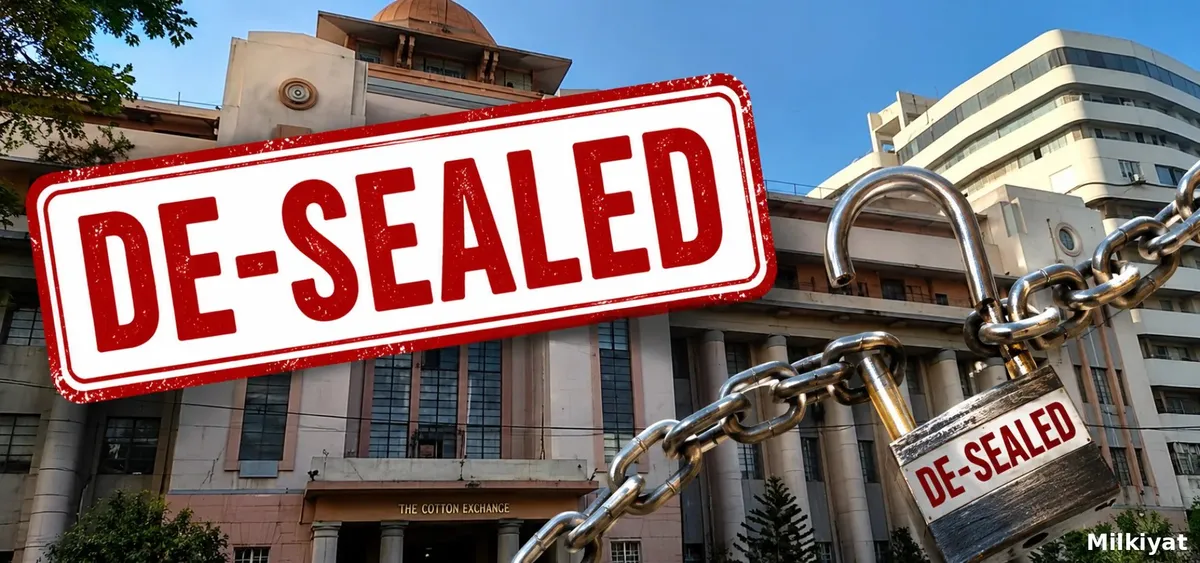
The Sindh High Court has ordered the Evacuee Trust Property Board to de-seal the historic Karachi Cotton Exchange building on I.I. Chundrigar Road while its ownership dispute continues, ruling that the petitioners were entitled to possession pending final determination of the property's status.
The Cotton Exchange building is a historic structure whose unchanged furnishings, slow moving ceiling fans, and period portraits have long preserved its original character. The Karachi Cotton Association, which has occupied and operated from the building, purchased the property through a registered conveyance deed dating back to before Pakistan's independence, and has maintained that this pre partition ownership means the building cannot legally be classified as evacuee or trust property at all.
In December 2025, the Evacuee Trust Property Board and the Federal Investigation Agency conducted a joint operation, securing and sealing the building after declaring it a federal trust property. The two agencies stated at the time that the building's title was vested in the federal government under a gazette notification, and that the Karachi Cotton Association had been occupying the premises and collecting rent from tenants without lawful authority. The Karachi Metropolitan Corporation separately challenged the sealing, arguing it had never received notice before the sealing order was issued and that neither the Evacuee Trust Property Board nor the FIA held jurisdiction to declare the property evacuee trust land in the first place, since the subject had become a provincial matter and Sindh had enacted its own legislation on the issue.
This latest order continues a pattern the Sindh High Court has followed through the case: allowing the building's occupants continued possession and normal business operation while the underlying ownership question remains formally unresolved. The court has previously directed that the matter of the building's status be referred to the chairman of the Evacuee Trust Property Board for determination, while ruling that until that determination is complete, the current occupants should be able to continue their possession and business activities without disturbance.
Authorities in Peshawar have declared 27 housing and plotting schemes in Shah Alam tehsil illegal, warning citizens against bookings, investments, and land transactions. Buyers and existing file holders are advised to verify NOC status directly with the relevant authorities before making any property-related decision.
Karachi has completed the Rs360 million rehabilitation of Jahangir Road from Gurumandir to Teen Hatti. The 1.4-kilometre project includes road widening, drainage improvements, footpaths, lane markings and new street lighting.
Punjab has completed two new flood protection dykes at Jalalpur Pirwala to safeguard urban areas and nearby rural settlements from flooding, following the severe 2025 crisis that placed the city and surrounding farmland under significant threat.
Master plan violations, narrowed drainage channels and encroachments on natural nullahs are contributing to worsening flooding in Islamabad. CDA now plans four check dams, a new E-11 nullah and removal of constructions obstructing waterways in vulnerable areas.
Real Estate Analyst
3 min read
The Sindh High Court has ordered the Evacuee Trust Property Board to de-seal the historic Karachi Cotton Exchange building on I.I. Chundrigar Road while its ownership dispute continues, ruling that the petitioners were entitled to possession pending final determination of the property's status.
The Cotton Exchange building is a historic structure whose unchanged furnishings, slow moving ceiling fans, and period portraits have long preserved its original character. The Karachi Cotton Association, which has occupied and operated from the building, purchased the property through a registered conveyance deed dating back to before Pakistan's independence, and has maintained that this pre partition ownership means the building cannot legally be classified as evacuee or trust property at all.
In December 2025, the Evacuee Trust Property Board and the Federal Investigation Agency conducted a joint operation, securing and sealing the building after declaring it a federal trust property. The two agencies stated at the time that the building's title was vested in the federal government under a gazette notification, and that the Karachi Cotton Association had been occupying the premises and collecting rent from tenants without lawful authority. The Karachi Metropolitan Corporation separately challenged the sealing, arguing it had never received notice before the sealing order was issued and that neither the Evacuee Trust Property Board nor the FIA held jurisdiction to declare the property evacuee trust land in the first place, since the subject had become a provincial matter and Sindh had enacted its own legislation on the issue.
This latest order continues a pattern the Sindh High Court has followed through the case: allowing the building's occupants continued possession and normal business operation while the underlying ownership question remains formally unresolved. The court has previously directed that the matter of the building's status be referred to the chairman of the Evacuee Trust Property Board for determination, while ruling that until that determination is complete, the current occupants should be able to continue their possession and business activities without disturbance.
Authorities in Peshawar have declared 27 housing and plotting schemes in Shah Alam tehsil illegal, warning citizens against bookings, investments, and land transactions. Buyers and existing file holders are advised to verify NOC status directly with the relevant authorities before making any property-related decision.
Karachi has completed the Rs360 million rehabilitation of Jahangir Road from Gurumandir to Teen Hatti. The 1.4-kilometre project includes road widening, drainage improvements, footpaths, lane markings and new street lighting.
Punjab has completed two new flood protection dykes at Jalalpur Pirwala to safeguard urban areas and nearby rural settlements from flooding, following the severe 2025 crisis that placed the city and surrounding farmland under significant threat.
Master plan violations, narrowed drainage channels and encroachments on natural nullahs are contributing to worsening flooding in Islamabad. CDA now plans four check dams, a new E-11 nullah and removal of constructions obstructing waterways in vulnerable areas.
The building's fundamental ownership status, whether it is genuinely evacuee trust property subject to federal control, or private property lawfully purchased before 1947 and never validly notified as evacuee land, has still not been finally determined. This de-sealing order addresses possession during the interim period rather than resolving that underlying legal question, meaning the dispute itself remains live even as the building itself reopens.
For a building of this historical and commercial significance, sitting on one of Karachi's most prominent commercial corridors, continued operational uncertainty carries real consequences for the businesses and tenants who depend on the space, independent of how the ownership question is eventually resolved. Stakeholders with any interest in the building, whether as tenants, business operators, or parties to the underlying dispute, should treat this de-sealing as restoring access and normal operations for now, while recognising that the final determination of the property's legal status remains a separate, still pending matter that could still affect long term occupancy arrangements once resolved.
The building's fundamental ownership status, whether it is genuinely evacuee trust property subject to federal control, or private property lawfully purchased before 1947 and never validly notified as evacuee land, has still not been finally determined. This de-sealing order addresses possession during the interim period rather than resolving that underlying legal question, meaning the dispute itself remains live even as the building itself reopens.
For a building of this historical and commercial significance, sitting on one of Karachi's most prominent commercial corridors, continued operational uncertainty carries real consequences for the businesses and tenants who depend on the space, independent of how the ownership question is eventually resolved. Stakeholders with any interest in the building, whether as tenants, business operators, or parties to the underlying dispute, should treat this de-sealing as restoring access and normal operations for now, while recognising that the final determination of the property's legal status remains a separate, still pending matter that could still affect long term occupancy arrangements once resolved.
