Guide
Is E-11 Islamabad CDA Approved? Societies, Title and Legal Status

By wajahat Ali
Real Estate Analyst
Updated 12 min read
Short Answer
E-11 is a recognised Islamabad sector under CDA jurisdiction, but not every society, building or property within E-11 can automatically be described as “CDA approved.” Approval and legal status can differ by society, layout plan, building and individual property.
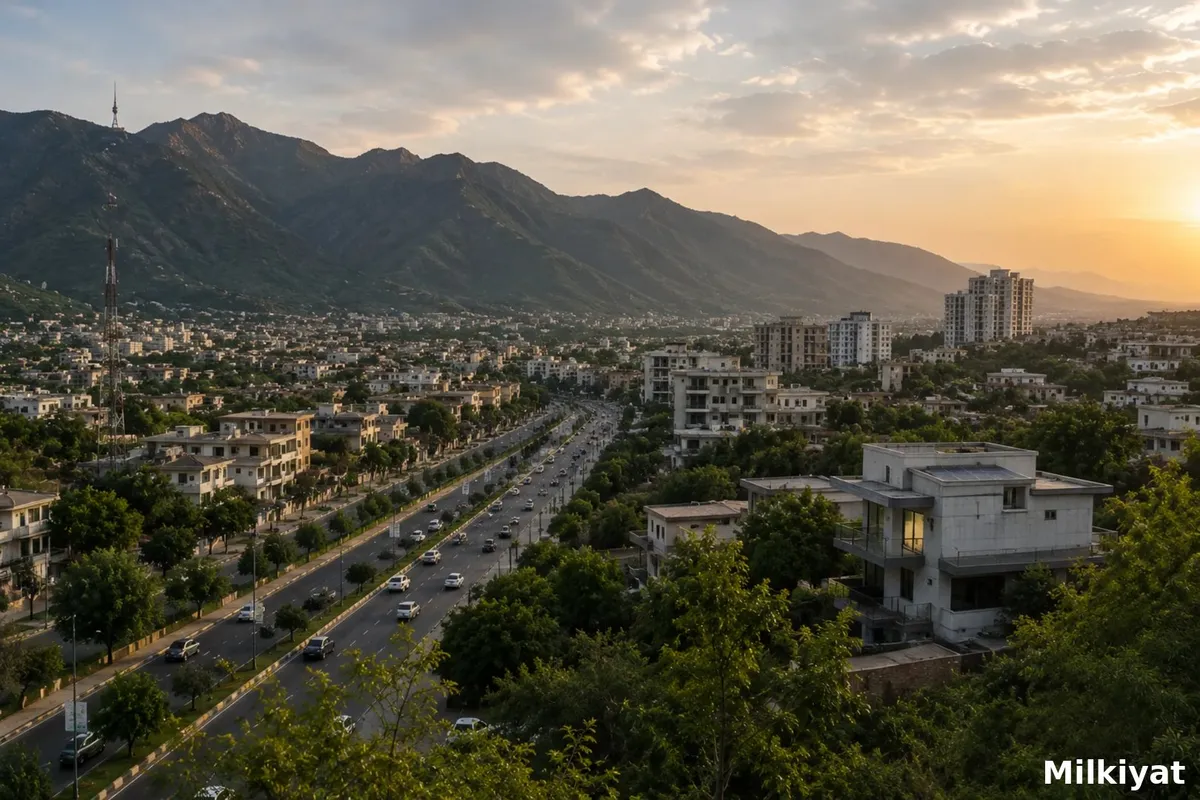
E-11 sits in Islamabad's Zone I near the Margalla Hills, close to F-10, F-11, and D-12, and has grown into a dense mix of houses, apartment towers, commercial hubs, and cooperative-society developments. Unlike most fully acquired CDA sectors, much of its land stayed in private and cooperative hands, which is why approval status can differ from one society, building, or plot to the next. For a broader look at the sector's layout, amenities, connectivity, and character, see our E-11 neighbourhood guide.
This article explains what "CDA approved" actually means in E-11, covering the land exemption behind its history, the original cooperative societies, the high-rise regularisation issue, and how to verify a specific property before paying. Because approval is building- and plot-specific, the address alone tells you very little. When reviewing E-11 properties for sale, note the exact sub-sector, society, and building for each one so you can check its records with CDA.
Before buying, verify the specific property's CDA approval or regularisation status, ownership, allotment and transfer records through the CDA official website and the relevant society. For related title differences, see F-11 vs E-11 Islamabad: CDA Freehold vs Cooperative Society Title.
Where E-11 sits inside Islamabad
E-11 is located in Zone I of Islamabad Capital Territory, near the Margalla Hills and Main Margalla Road, with access toward F-10, F-11, D-12 and the wider Islamabad road network. The sector is divided into E-11/1, E-11/2, E-11/3 and E-11/4, with commercial hubs, residential pockets and a designated industrial area.
On a map, E-11 looks like a conventional Islamabad sector: numbered sub-sectors, a planned road grid, utility corridors and open areas. Legally and administratively, however, its underlying land history is different from fully acquired CDA sectors. That difference is the starting point for understanding why the same address can contain both formally documented developments and buildings facing enforcement or regularisation questions. Buyers can review relevant planning information, regulations and CDA public notices when checking the status of a specific property or development.
What CDA approved actually means in E-11
In property listings, the phrase “CDA approved” can refer to several separate things. They should not be treated as interchangeable.
| Approval level | What it means | Why it matters in E-11 |
|---|---|---|
| Sector jurisdiction | E-11 lies inside Islamabad Capital Territory and CDA’s regulatory territory. | This is true sector-wide, but it does not approve every project. |
| Society layout-plan approval | CDA has accepted the society’s subdivision or layout plan. | The status varies by society and may have been cancelled, challenged or left incomplete. |
| No Objection Certificate | CDA has issued an NOC for the housing scheme or development to proceed. | Several original E-11 societies were reported as operating without an NOC at relevant times. |
| Building-plan approval | CDA has approved the plan for a particular apartment tower, plaza or commercial building. | Society-level approval does not automatically approve each structure. |
| Completion or occupancy certificate | The completed building matches the approved plan and satisfies applicable safety and completion requirements. | A building may be occupied without having the full completion record a buyer assumes exists. |
A project can therefore satisfy the first category while failing to satisfy one or more of the others. That is why the correct question is not simply “Is E-11 approved?” It is: What exactly has been approved, by whom, for which plot or building, and is that approval current?
The exemption that shaped E-11’s legal history
The land around the Golra Revenue Estate, which included E-11 and nearby areas, received an exemption from compulsory acquisition during the Ayub Khan period because of the connection with the Golra Sharif shrine. In the 1980s, the exemption was narrowed specifically to E-11.
The result was that much of E-11 remained in private or cooperative hands instead of being acquired, compensated and developed by CDA in the same manner as many established Islamabad sectors. CDA acquired only part of the land, including a northern strip later connected with allotments and private development.
This produced what officials and reporting described as an “exempted pocket”: land still subject to CDA building controls and bylaws, but not managed through exactly the same ownership and development process as an ordinary fully acquired sector. That regulatory gap became the backdrop for later disputes over layout plans, drainage, apartment buildings, land allotments and enforcement.
After severe urban flooding in E-11 in 2021, which resulted in the deaths of a woman and her child, public attention focused on a stormwater drain that had reportedly been narrowed during an approval process. CDA subsequently moved a formal summary seeking revocation of the old exemption orders, with the stated aim of bringing enforcement in E-11 closer to the rest of Zone I.
The original cooperative societies: not one legal status
Development in E-11 was carried out mainly through five cooperative housing societies operating on land that was not fully acquired by CDA or on the northern strip:
| Society | Publicly reported issue to investigate |
|---|---|
| Medical Cooperative Housing Society | A layout plan was approved in 2007 but was later cancelled after drainage-width concerns were linked to the 2021 flooding file. |
| Federation Cooperative Housing Society | Reported by CDA sources as having been developed without an approved layout plan and NOC at the relevant time. |
| Federal Services Society | Also reported as having operated without an approved layout plan and NOC at the relevant time. |
| Police Foundation / National Police Foundation | Requires plot- and block-specific verification rather than relying on the society name alone. |
| Multi-Professional Cooperative Housing Society | Markets part of its holding as Islamabad Gardens and has the most formal—but contested—paper trail among the developments discussed here. |
The important point is that a society’s age, size or market reputation does not substitute for its current approval record. A buyer should request the specific layout-plan approval letter, NOC reference and current transfer or possession status for the plot being purchased.
MPCHS, Islamabad Gardens and the northern strip
In December 2008, CDA entered into a Joint Venture Agreement (JVA) with MPCHS to develop approximately 54 acres in E-11's northern strip. In April 2011, the Supreme Court of Pakistan held that the JVA was legally inoperative and directed the CDA Board to take over the project. The judgment also noted MPCHS's role in clearing, funding and developing the land.
The ruling did not erase the project's built history. Islamabad Gardens and the wider E-11 allotment record continued to appear in later disputes and litigation, including a NAB reference reported in 2025 concerning alleged land fraud connected with the wider allotment history.
For a buyer, this means that a plot marketed as MPCHS or Islamabad Gardens should be checked at the plot level. Confirm the current possession, transfer and allotment position directly with the relevant office and CDA records where applicable. The society's general name is not enough to establish that an individual plot is clear.
The high-rise problem: approval is building-specific
The most visible legal issue in present-day E-11 is the spread of multi-storey buildings. CDA building-control notices and public reporting have described more than 60 apartment, commercial and wedding-hall structures that were built across the sector, in many cases without prior approval of the layout or building plan.
CDA has issued sealing and demolition notices against named properties. One example was a final notice involving Fortune Residency/Empire in December 2021 after the authority alleged that an earlier seal had been broken.
At the same time, CDA has tried to create a legal route for some existing high-rises instead of treating demolition as the only outcome. In February 2020, it notified parameters intended to regularise unauthorised high-rises in E-11, recognising the scale of private investment and the number of residents involved. The Islamabad High Court also directed that a mechanism be made available for regularisation in the relevant litigation, rather than treating every existing structure as automatically beyond remedy.
That does not make every occupied tower approved. It means that some buildings may be eligible to apply for or complete regularisation, while others may remain exposed to notices, sealing, demolition or unresolved documentation. Buyers should ask for the building’s own approved plan, NOC or regularisation record, not just the society’s brochure.
Why the answer changes from plot to plot
Two apartments in the same building can carry different practical risk if one has complete transfer and completion documentation while the other has unresolved dues, an incomplete file or a disputed allotment. Similarly, two properties in the same society can have different histories if they fall into separate blocks, development phases or land parcels.
The following framework is more useful than a blanket label:
| Question | What a positive answer should look like |
|---|---|
| Is the address inside CDA jurisdiction? | Confirmed sector and sub-sector location within Islamabad Capital Territory. |
| Does the society have a valid layout plan? | A verifiable approval letter or current CDA record for the relevant scheme or phase. |
| Does the society have an NOC? | A current NOC reference that matches the society, phase and development being sold. |
| Is the specific building approved? | Building-plan approval for the exact tower, plaza or commercial structure. |
| Is the unit or plot transferable? | Current allotment, transfer, dues and possession records in the seller’s name. |
| Can construction or occupation legally proceed? | Completion, occupancy or regularisation documentation appropriate to that property. |
How to verify E-11 approval before you pay
Start by recording the exact address: E-11 sub-sector, society, block, street, plot or building name and unit number. “E-11 Islamabad” is too broad for a meaningful legal search.
Then ask the seller for the society’s layout-plan approval letter and NOC number. Cross-check the documents with CDA’s Planning Wing rather than accepting a scanned file or broker statement as conclusive.
For an apartment or commercial unit, request the building-specific approved plan and ask whether the structure has a completion, occupancy or regularisation record. A society-level document cannot automatically cure an unapproved tower.
Check CDA public notices and illegal-construction lists for the building or society name. If the property appears in a notice, ask for the current status, the response filed by the owner and any final order not merely an assurance that the matter is “under process.”
For MPCHS or Islamabad Gardens plots, verify possession, transfer and allotment status directly because of the project’s litigation history. Finally, do not release payment until the seller’s identity, title chain, dues position and the property’s current approval status have been checked together.
Property Verification Checklist for E-11
| Verify | What to Check | Where to Check |
|---|---|---|
| 🏘️ Society Status | Layout plan and approval status | CDA / Society office |
| 📄 NOC Status | NOC and development position | CDA |
| 🏢 Building Approval | Approved building plan and status | CDA Building Control |
| 📍 Property Record | Allotment, ownership and transfer | CDA / Relevant society |
| ⚖️ Legal Status | Regularisation or enforcement notices | CDA Public Notices |
| 💰 Outstanding Dues | Pending charges or liabilities | Relevant society |
What “under process” should mean
“Under process” is not a single legal category. It may refer to an approved layout plan awaiting a final NOC, a regularisation application awaiting scrutiny, a building facing objections, or a project with no meaningful approval record at all.
Ask the seller to specify the process, the authority handling it, the reference number, the date of the latest action and the document that would complete it. If none of those details can be produced, treat “under process” as an unresolved risk rather than as near-approval.
Frequently Asked Questions
Is E-11 Islamabad a legal sector? Yes. E-11 falls under CDA's jurisdiction, but this does not automatically approve every society, building or property within the sector.
Does CDA jurisdiction mean every E-11 project is approved? No. Society approval, NOCs, building plans and regularisation are separate matters.
Why are there approval disputes in E-11? E-11 has a complex land and development history, with private and cooperative ownership contributing to documentation and enforcement issues.
Can an unauthorised E-11 building be regularised? Possibly, depending on CDA rules and the specific building. Regularisation is not automatic.
Is it safe to buy an apartment in E-11? It depends on the specific building and unit. Verify approvals, ownership, transferability, dues and any CDA enforcement notices before buying.
Sources External Sources
-
Capital Development Authority (CDA), official website:https://www.cda.gov.pk/
-
Capital Development Authority (CDA), Laws & Regulations: https://www.cda.gov.pk/lawsAndRegulations
-
Capital Development Authority (CDA), Public Notices: https://www.cda.gov.pk/publicNotices
-
Rawalpindi Development Authority (RDA), Private Housing Schemes: https://rda.gop.pk/private-housing-schemes
Related Milkiyat Guides
-
Milkiyat, F-11 vs E-11 Islamabad: CDA Freehold vs Cooperative Society Title: https://milkiyat.com/articles/f-11-vs-e-11-islamabad-cda-freehold-vs-cooperative-society-title
-
Milkiyat, List of CDA-Approved Housing Societies in Islamabad: https://milkiyat.com/articles/list-of-best-cda-approved-housing-societies-in-islamabad-2026
-
Milkiyat, Islamabad Area Guide: https://milkiyat.com/areas/islamabad
-
Milkiyat, Property Tax Guide: https://milkiyat.com/insights/tax-guide
This article is for general information only and does not constitute legal advice. Property status can change. Verify current approval, title, transfer and enforcement status directly with CDA and obtain qualified legal advice before making a purchase or payment.