News
KDA Targets Rs8 Billion Encroached Land in North Karachi as 350 Properties Face Scrutiny
Real Estate Analyst
4 min read
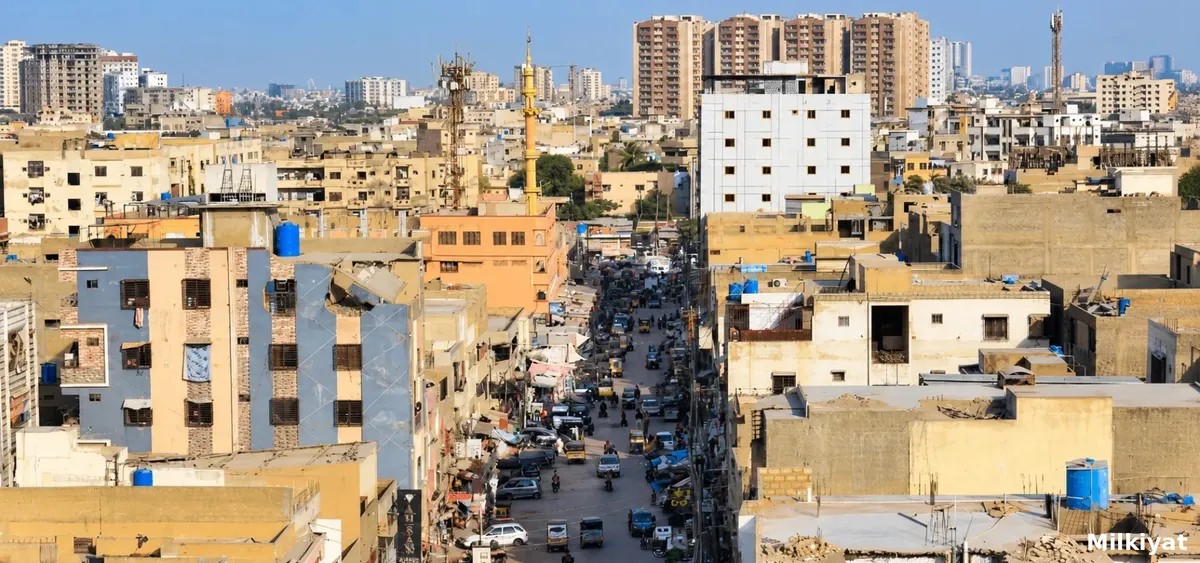
The Karachi Development Authority has identified more than 350 shops, houses, and other structures occupying authority land in North Karachi, valued at more than Rs8 billion. Occupants are being asked to prove ownership, with those unable to establish legal title facing eviction and demolition.
Under this action, occupants of the identified properties must produce documentation establishing legal title to the land they occupy. Where such documentation cannot be produced, or where existing records show the land as KDA property, the authority is proceeding toward eviction and demolition rather than allowing continued occupation to stand unresolved.
The Karachi Development Authority was established in 1957 as the city's planning authority, replacing the earlier Karachi Improvement Trust, and today remains responsible, alongside the Lyari Development Authority and Malir Development Authority, for the development of undeveloped lands around Karachi. KDA briefly came under the control of Karachi's local government and mayor in 2001, before being placed back under the direct control of the Government of Sindh in 2011, meaning city planning and land management decisions in Karachi are made at the provincial rather than municipal level, a structural detail directly relevant to how an action of this scale is authorised and executed.
This North Karachi action is not an isolated event, and understanding its place within a much larger, well documented problem is essential context. KDA has previously disclosed, during prior formal proceedings, that tens of thousands of amenity plots across different parts of Karachi had been encroached upon through a practice locally known as China cutting, the illegal subdivision of state or private land into smaller plots for informal sale, with the authority at one stage confirming it had managed to retrieve only a small fraction of these plots through demolition operations covering houses, shops, boundary walls, marriage halls, hotels, and other structures, leaving the large majority still under encroachment. This North Karachi action represents a further, more recent chapter within that same, much larger and still ongoing recovery effort.
Karachi police have submitted a fresh charge sheet in the Gul Plaza fire case, placing primary responsibility on the shopping mall’s management over serious fire safety failures. The findings have renewed scrutiny of safety compliance, emergency exits and legal liability across Karachi’s older commercial plazas.
Prime Minister Shehbaz Sharif has urged early groundbreaking of Pakistan’s ML-1 railway project as the government and ADB push for faster progress on railway reforms, freight connectivity, and infrastructure development. The project could have major implications for industrial land, warehousing, and logistics property along the Karachi–Peshawar corridor.
Punjab has expanded its environmental enforcement drive, with construction sites now facing stricter inspections and sealing over regulatory violations. Six of 30 inspected sites were sealed during the reviewed period.
Punjab has launched Mandi Mart projects in Lahore, Multan and Faisalabad, offering regulated commercial space linked to agricultural market modernisation. The Kahna Kacha Phase I commercial plot draw is scheduled for 10 September 2026.
Real Estate Analyst
4 min read
The Karachi Development Authority has identified more than 350 shops, houses, and other structures occupying authority land in North Karachi, valued at more than Rs8 billion. Occupants are being asked to prove ownership, with those unable to establish legal title facing eviction and demolition.
Under this action, occupants of the identified properties must produce documentation establishing legal title to the land they occupy. Where such documentation cannot be produced, or where existing records show the land as KDA property, the authority is proceeding toward eviction and demolition rather than allowing continued occupation to stand unresolved.
The Karachi Development Authority was established in 1957 as the city's planning authority, replacing the earlier Karachi Improvement Trust, and today remains responsible, alongside the Lyari Development Authority and Malir Development Authority, for the development of undeveloped lands around Karachi. KDA briefly came under the control of Karachi's local government and mayor in 2001, before being placed back under the direct control of the Government of Sindh in 2011, meaning city planning and land management decisions in Karachi are made at the provincial rather than municipal level, a structural detail directly relevant to how an action of this scale is authorised and executed.
This North Karachi action is not an isolated event, and understanding its place within a much larger, well documented problem is essential context. KDA has previously disclosed, during prior formal proceedings, that tens of thousands of amenity plots across different parts of Karachi had been encroached upon through a practice locally known as China cutting, the illegal subdivision of state or private land into smaller plots for informal sale, with the authority at one stage confirming it had managed to retrieve only a small fraction of these plots through demolition operations covering houses, shops, boundary walls, marriage halls, hotels, and other structures, leaving the large majority still under encroachment. This North Karachi action represents a further, more recent chapter within that same, much larger and still ongoing recovery effort.
Karachi police have submitted a fresh charge sheet in the Gul Plaza fire case, placing primary responsibility on the shopping mall’s management over serious fire safety failures. The findings have renewed scrutiny of safety compliance, emergency exits and legal liability across Karachi’s older commercial plazas.
Prime Minister Shehbaz Sharif has urged early groundbreaking of Pakistan’s ML-1 railway project as the government and ADB push for faster progress on railway reforms, freight connectivity, and infrastructure development. The project could have major implications for industrial land, warehousing, and logistics property along the Karachi–Peshawar corridor.
Punjab has expanded its environmental enforcement drive, with construction sites now facing stricter inspections and sealing over regulatory violations. Six of 30 inspected sites were sealed during the reviewed period.
Punjab has launched Mandi Mart projects in Lahore, Multan and Faisalabad, offering regulated commercial space linked to agricultural market modernisation. The Kahna Kacha Phase I commercial plot draw is scheduled for 10 September 2026.
KDA's own operational history shows these enforcement drives are rarely straightforward. Comparable anti encroachment actions elsewhere in Karachi have previously encountered significant resistance during execution, and displaced residents from prior demolition operations have at times staged public protests demanding resettlement support the government had committed to but not fully delivered. This history is relevant context for understanding both the seriousness of KDA's claim over this specific North Karachi land, and the genuine complexity involved in actually resolving occupancy at this scale.
The specific timeline for eviction or demolition action against North Karachi properties that fail to establish legal title has not been detailed, nor has KDA indicated what resettlement or compensation provisions, if any, will apply to occupants found to lack valid ownership documentation. Given the authority's own documented history of encountering resistance and controversy during comparable operations elsewhere in the city, how this specific North Karachi action actually unfolds on the ground remains to be seen.
Anyone owning, occupying, or holding any documentation related to a shop, house, or structure in the affected North Karachi area should treat this action as an urgent prompt to gather and verify all available ownership records immediately, rather than waiting for a formal notice to arrive before beginning that process. Given KDA's own documented history showing large scale informal subdivision and sale of land across the city over the years, occupants should be aware that a long standing, seemingly settled occupation does not itself constitute proof of legal title, and should seek direct confirmation of their specific plot's status from KDA's own land records rather than relying on the length of their occupation or a prior informal purchase as sufficient protection.
Prospective buyers considering any property in North Karachi, or in any area with a documented history of informal land subdivision, should treat independent, direct verification of KDA title records as an essential, non negotiable step before any transaction, given the genuinely large scale of encroachment KDA's own past disclosures have confirmed across the city. A seller's possession of a property, or even a long standing local reputation of ownership, should not be treated as adequate substitute for confirmed, documented legal title given how extensively this kind of informal land occupation has been documented in Karachi specifically.
KDA's own operational history shows these enforcement drives are rarely straightforward. Comparable anti encroachment actions elsewhere in Karachi have previously encountered significant resistance during execution, and displaced residents from prior demolition operations have at times staged public protests demanding resettlement support the government had committed to but not fully delivered. This history is relevant context for understanding both the seriousness of KDA's claim over this specific North Karachi land, and the genuine complexity involved in actually resolving occupancy at this scale.
The specific timeline for eviction or demolition action against North Karachi properties that fail to establish legal title has not been detailed, nor has KDA indicated what resettlement or compensation provisions, if any, will apply to occupants found to lack valid ownership documentation. Given the authority's own documented history of encountering resistance and controversy during comparable operations elsewhere in the city, how this specific North Karachi action actually unfolds on the ground remains to be seen.
Anyone owning, occupying, or holding any documentation related to a shop, house, or structure in the affected North Karachi area should treat this action as an urgent prompt to gather and verify all available ownership records immediately, rather than waiting for a formal notice to arrive before beginning that process. Given KDA's own documented history showing large scale informal subdivision and sale of land across the city over the years, occupants should be aware that a long standing, seemingly settled occupation does not itself constitute proof of legal title, and should seek direct confirmation of their specific plot's status from KDA's own land records rather than relying on the length of their occupation or a prior informal purchase as sufficient protection.
Prospective buyers considering any property in North Karachi, or in any area with a documented history of informal land subdivision, should treat independent, direct verification of KDA title records as an essential, non negotiable step before any transaction, given the genuinely large scale of encroachment KDA's own past disclosures have confirmed across the city. A seller's possession of a property, or even a long standing local reputation of ownership, should not be treated as adequate substitute for confirmed, documented legal title given how extensively this kind of informal land occupation has been documented in Karachi specifically.