News
PM Presses ADB for Early ML-1 Groundbreaking, What It Means for Industrial and Logistics Property
News
News
Real Estate Analyst
4 min read
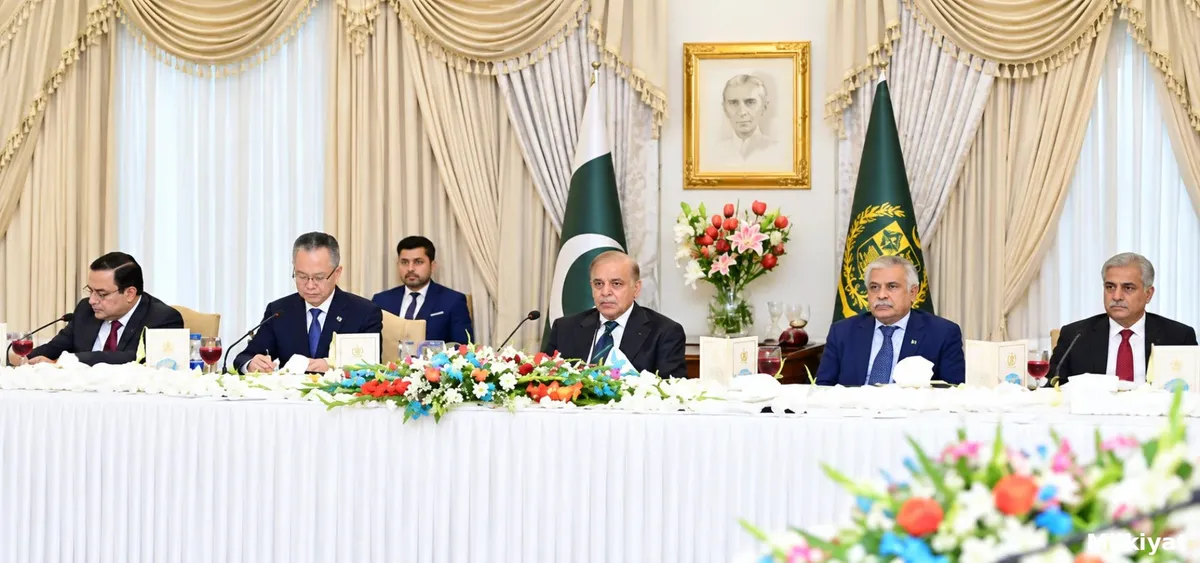
Prime Minister Shehbaz Sharif stressed the need for early groundbreaking of the Main Line 1 railway project during a breakfast meeting with Asian Development Bank Vice President for South, Central and West Asia Yingming Yang in Islamabad on 4 September 2026, describing the Karachi to Peshawar corridor's modernisation as a vital national infrastructure priority.
The meeting reviewed Pakistan and ADB's multi decade development partnership and discussed priority interventions under the new Country Partnership Strategy 2026 to 2030. The prime minister said upgrading ML-1 is essential for modernising freight logistics, strengthening regional trade connectivity, and supporting major industrial initiatives, while ADB welcomed progress on the project and agreed to support establishment of a joint working group focused on reforms within Pakistan Railways. Both sides concluded with a mutual pledge to translate the strategic priorities of the CPS 2026 to 2030 into concrete, high impact results.
ML-1 is a planned 1,733 kilometre upgrade of Pakistan Railways' existing main line, connecting Karachi with Peshawar through major cities including Hyderabad, Rohri, Multan, Lahore, and Rawalpindi, with the project also covering the Taxila to Havelian section. The project envisages upgrading and doubling the railway track, with trains eventually expected to operate at speeds of up to 160 kilometres per hour, compared with roughly 80 kilometres per hour previously. Estimated at approximately 10 billion dollars in total, ML-1 is a key component of the China Pakistan Economic Corridor, though its implementation has faced repeated delays over the years due to funding constraints, bureaucratic hurdles, and an unfavourable economic and international financing environment.
Pakistan has already locked in 2 billion dollars in financing from ADB specifically for the Karachi to Rohri segment of the corridor, a shift that has moved initial execution toward multilateral lending rather than relying solely on Chinese financing, reportedly with Beijing's explicit consent to ensure the arrangement does not conflict with the overarching CPEC framework. This Karachi to Rohri phase is already under active implementation, distinguishing it from the broader Karachi to Peshawar corridor still awaiting the groundbreaking the prime minister specifically pressed for at this meeting.
Karachi police have submitted a fresh charge sheet in the Gul Plaza fire case, placing primary responsibility on the shopping mall’s management over serious fire safety failures. The findings have renewed scrutiny of safety compliance, emergency exits and legal liability across Karachi’s older commercial plazas.
Punjab has expanded its environmental enforcement drive, with construction sites now facing stricter inspections and sealing over regulatory violations. Six of 30 inspected sites were sealed during the reviewed period.
KDA has identified more than 350 shops, houses and structures on authority land worth over Rs8 billion in North Karachi. Occupants unable to prove legal title could face eviction and demolition.
Punjab has launched Mandi Mart projects in Lahore, Multan and Faisalabad, offering regulated commercial space linked to agricultural market modernisation. The Kahna Kacha Phase I commercial plot draw is scheduled for 10 September 2026.
Real Estate Analyst
4 min read
Prime Minister Shehbaz Sharif stressed the need for early groundbreaking of the Main Line 1 railway project during a breakfast meeting with Asian Development Bank Vice President for South, Central and West Asia Yingming Yang in Islamabad on 4 September 2026, describing the Karachi to Peshawar corridor's modernisation as a vital national infrastructure priority.
The meeting reviewed Pakistan and ADB's multi decade development partnership and discussed priority interventions under the new Country Partnership Strategy 2026 to 2030. The prime minister said upgrading ML-1 is essential for modernising freight logistics, strengthening regional trade connectivity, and supporting major industrial initiatives, while ADB welcomed progress on the project and agreed to support establishment of a joint working group focused on reforms within Pakistan Railways. Both sides concluded with a mutual pledge to translate the strategic priorities of the CPS 2026 to 2030 into concrete, high impact results.
ML-1 is a planned 1,733 kilometre upgrade of Pakistan Railways' existing main line, connecting Karachi with Peshawar through major cities including Hyderabad, Rohri, Multan, Lahore, and Rawalpindi, with the project also covering the Taxila to Havelian section. The project envisages upgrading and doubling the railway track, with trains eventually expected to operate at speeds of up to 160 kilometres per hour, compared with roughly 80 kilometres per hour previously. Estimated at approximately 10 billion dollars in total, ML-1 is a key component of the China Pakistan Economic Corridor, though its implementation has faced repeated delays over the years due to funding constraints, bureaucratic hurdles, and an unfavourable economic and international financing environment.
Pakistan has already locked in 2 billion dollars in financing from ADB specifically for the Karachi to Rohri segment of the corridor, a shift that has moved initial execution toward multilateral lending rather than relying solely on Chinese financing, reportedly with Beijing's explicit consent to ensure the arrangement does not conflict with the overarching CPEC framework. This Karachi to Rohri phase is already under active implementation, distinguishing it from the broader Karachi to Peshawar corridor still awaiting the groundbreaking the prime minister specifically pressed for at this meeting.
Karachi police have submitted a fresh charge sheet in the Gul Plaza fire case, placing primary responsibility on the shopping mall’s management over serious fire safety failures. The findings have renewed scrutiny of safety compliance, emergency exits and legal liability across Karachi’s older commercial plazas.
Punjab has expanded its environmental enforcement drive, with construction sites now facing stricter inspections and sealing over regulatory violations. Six of 30 inspected sites were sealed during the reviewed period.
KDA has identified more than 350 shops, houses and structures on authority land worth over Rs8 billion in North Karachi. Occupants unable to prove legal title could face eviction and demolition.
Punjab has launched Mandi Mart projects in Lahore, Multan and Faisalabad, offering regulated commercial space linked to agricultural market modernisation. The Kahna Kacha Phase I commercial plot draw is scheduled for 10 September 2026.
The government is aiming to restart physical work on the broader project from early 2027, following years of the project remaining stalled. This meeting's specific push for early groundbreaking reflects an effort to accelerate that timeline rather than wait for the full early 2027 target date.
This ML-1 discussion did not occur in isolation, and reflects Pakistan's broader recent momentum in international financial engagement. The prime minister specifically noted that Pakistan has navigated a difficult economic turnaround through fiscal, structural, and governance reforms that have restored macroeconomic stability, reinforced investor confidence, and earned stable outlook upgrades from major international credit rating agencies including Fitch, Moody's, and S&P. This broader credibility improvement forms useful context for why ADB and Pakistan are simultaneously discussing accelerated financing and groundbreaking timelines for a project that has previously struggled specifically due to financing constraints.
No firm groundbreaking date for the broader Karachi to Peshawar corridor has been announced, and the meeting's outcome represents a discussion and mutual pledge rather than a signed, binding commitment to a specific accelerated timeline. Given ML-1's own multi year history of delay despite periodic renewed pushes of this kind, readers should treat this meeting as a genuine signal of intensified diplomatic and financial engagement rather than confirmation that construction is now imminent.
A genuinely modernised, doubled rail corridor connecting Karachi to Peshawar at more than double current operating speeds would represent a significant upgrade to Pakistan's freight logistics capacity, with direct relevance for industrial land, warehousing, and logistics property along the route, particularly around the already active Karachi to Rohri segment where implementation is under way. Businesses and investors evaluating industrial or logistics property along this corridor should watch specifically for confirmation of an actual groundbreaking date for the broader project, treating the Karachi to Rohri segment's active implementation as the more concrete, currently deliverable component to track in the near term, while recognising that the full corridor's benefits remain contingent on funding and construction progress that has historically moved slower than announced timelines.
The government is aiming to restart physical work on the broader project from early 2027, following years of the project remaining stalled. This meeting's specific push for early groundbreaking reflects an effort to accelerate that timeline rather than wait for the full early 2027 target date.
This ML-1 discussion did not occur in isolation, and reflects Pakistan's broader recent momentum in international financial engagement. The prime minister specifically noted that Pakistan has navigated a difficult economic turnaround through fiscal, structural, and governance reforms that have restored macroeconomic stability, reinforced investor confidence, and earned stable outlook upgrades from major international credit rating agencies including Fitch, Moody's, and S&P. This broader credibility improvement forms useful context for why ADB and Pakistan are simultaneously discussing accelerated financing and groundbreaking timelines for a project that has previously struggled specifically due to financing constraints.
No firm groundbreaking date for the broader Karachi to Peshawar corridor has been announced, and the meeting's outcome represents a discussion and mutual pledge rather than a signed, binding commitment to a specific accelerated timeline. Given ML-1's own multi year history of delay despite periodic renewed pushes of this kind, readers should treat this meeting as a genuine signal of intensified diplomatic and financial engagement rather than confirmation that construction is now imminent.
A genuinely modernised, doubled rail corridor connecting Karachi to Peshawar at more than double current operating speeds would represent a significant upgrade to Pakistan's freight logistics capacity, with direct relevance for industrial land, warehousing, and logistics property along the route, particularly around the already active Karachi to Rohri segment where implementation is under way. Businesses and investors evaluating industrial or logistics property along this corridor should watch specifically for confirmation of an actual groundbreaking date for the broader project, treating the Karachi to Rohri segment's active implementation as the more concrete, currently deliverable component to track in the near term, while recognising that the full corridor's benefits remain contingent on funding and construction progress that has historically moved slower than announced timelines.
