News
Punjab Sets June 2027 Deadline for 5,734 Water Filtration Plants, Approves New Water Supply Project

By Mariam Khan
Real Estate Analyst
3 min read
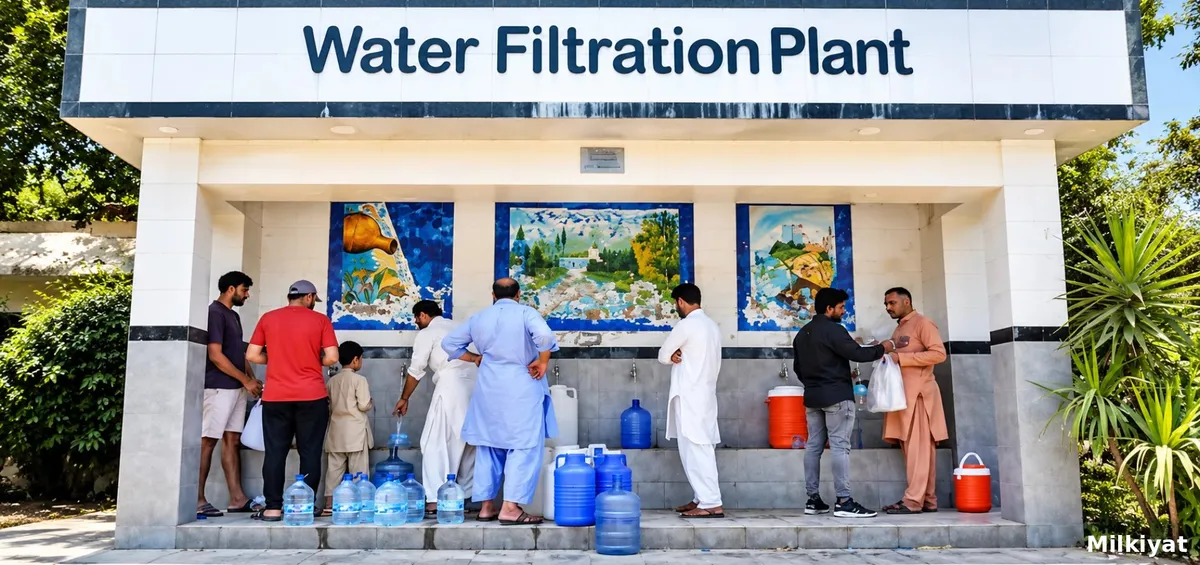
Punjab Chief Minister Maryam Nawaz Sharif has set June 2027 as the deadline for completing 5,734 water filtration plants across the province. The announcement was made at a meeting of the Punjab Saaf Pani Authority and reported on October 25, 2026. At the same meeting the chief minister approved a Last-Mile Water Supply Project for areas facing drinking-water shortages. The announcement sets a deadline and approves new measures. It does not mean that any of the plants or schemes have been completed. The reports we have seen do not say how many of the 5,734 plants are already working. Provincial announcements are published by the Government of the Punjab.
The Filtration Plant Target
The target is 5,734 plants by June 2027. The reports do not say how many have been installed so far, what the plants cost or where they will be placed beyond the districts named below. We therefore treat June 2027 as a target and not as a completion date.
The Last-Mile Water Supply Project
The project targets areas facing drinking-water shortages, with new water supply infrastructure planned for Chakwal, Rajanpur and Rawalpindi. Priority schemes cover 256 kilometres in Chakwal and 1,780 kilometres in Rajanpur. The reports give no distance for Rawalpindi and no cost or timetable for any of the schemes, so we cannot say when water will reach homes.
Maintenance and Local Oversight
Mobile maintenance units are planned for every tehsil, and local committees are to oversee filtration plants in residential neighbourhoods. The reports do not say how many units will be provided, who will sit on the committees or how they will be funded. We describe these as plans.
Why Water Access Matters for Property
Improved drinking-water infrastructure could strengthen essential services in residential neighbourhoods, particularly in underserved areas of Rawalpindi, Chakwal and Rajanpur. Reliable water access is an important consideration for homebuyers, housing developments and urban planning. Any effect on property prices or investment demand would depend on actual project completion and service reliability, and the reports do not give one.
What This Means for Residents, Buyers and Developers
Residents should not expect new supply before the schemes are built, and can ask their local authority about the schedule for their area. Buyers and developers in the three districts may wish to check water availability, as one of the standard checks before buying. The signals to watch are the number of plants completed, the tender and construction schedules for the Last-Mile schemes, the committees' first reports and the June 2027 progress.