News
Supreme Court Questions Sindh Government's Property Ownership Claim, Orders Fresh Hearing Within Six Months

By Mariam Khan
Real Estate Analyst
3 min read
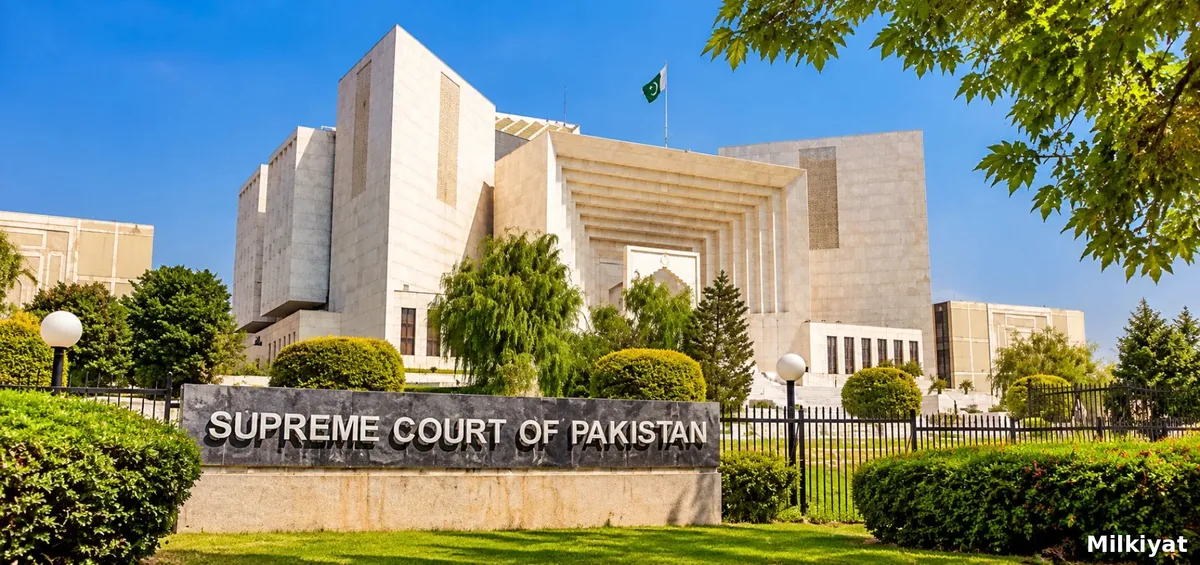
The Supreme Court of Pakistan (SC) has questioned the Sindh government's ownership claim in a long-running dispute over a 1,000-square-yard property. The court set aside the Sindh High Court's earlier judgment and sent the case back for fresh adjudication, preferably within six months. The decision was reported on October 25, 2026. It did not finally decide who owns the property. The reports we have seen do not name the owner or give the property's location, so we name neither.
How the Dispute Arose
The property was bought in 2011 through two registered sale deeds. The Sindh government occupied it as a tenant. It later challenged the owner's title, claiming that an earlier land auction had been cancelled in 1974. The reports do not say when the government first raised the claim or what proceedings it arose in beyond the tenancy case.
What the Court Observed
Justice Muhammad Ali Mazhar questioned why the government had not asserted its ownership claim earlier. The court observed that an unsupported oral claim about the cancellation of an auction was not enough to establish ownership rights in the tenancy proceedings. This was an observation about the evidence in those proceedings. It is not a finding that the claim is false.
What the Court Decided
The Supreme Court set aside the Sindh High Court's judgment and referred the case back for fresh adjudication, preferably within six months. It did not finally determine ownership. The reports do not say which court or forum will rehear the case. The Sindh High Court issued the judgment that was set aside.
Why This Matters for Property
The judgment highlights the importance of documented ownership claims, registered sale deeds and consistent legal positions in landlord-tenant disputes. It may be relevant to owners whose premises are occupied by government departments. The decision does not establish an automatic right to recover possession, and we do not suggest it does.
What This Means for Owners, Tenants and Buyers
Owners who let property to government departments should keep their registered deeds and rent records. Buyers should check the chain of title, including any old auction or allotment history, before paying. Tenants, including public bodies, should raise any competing title claim promptly. The signals to watch are the rehearing, the evidence the government produces about the 1974 auction and the final decision on ownership.